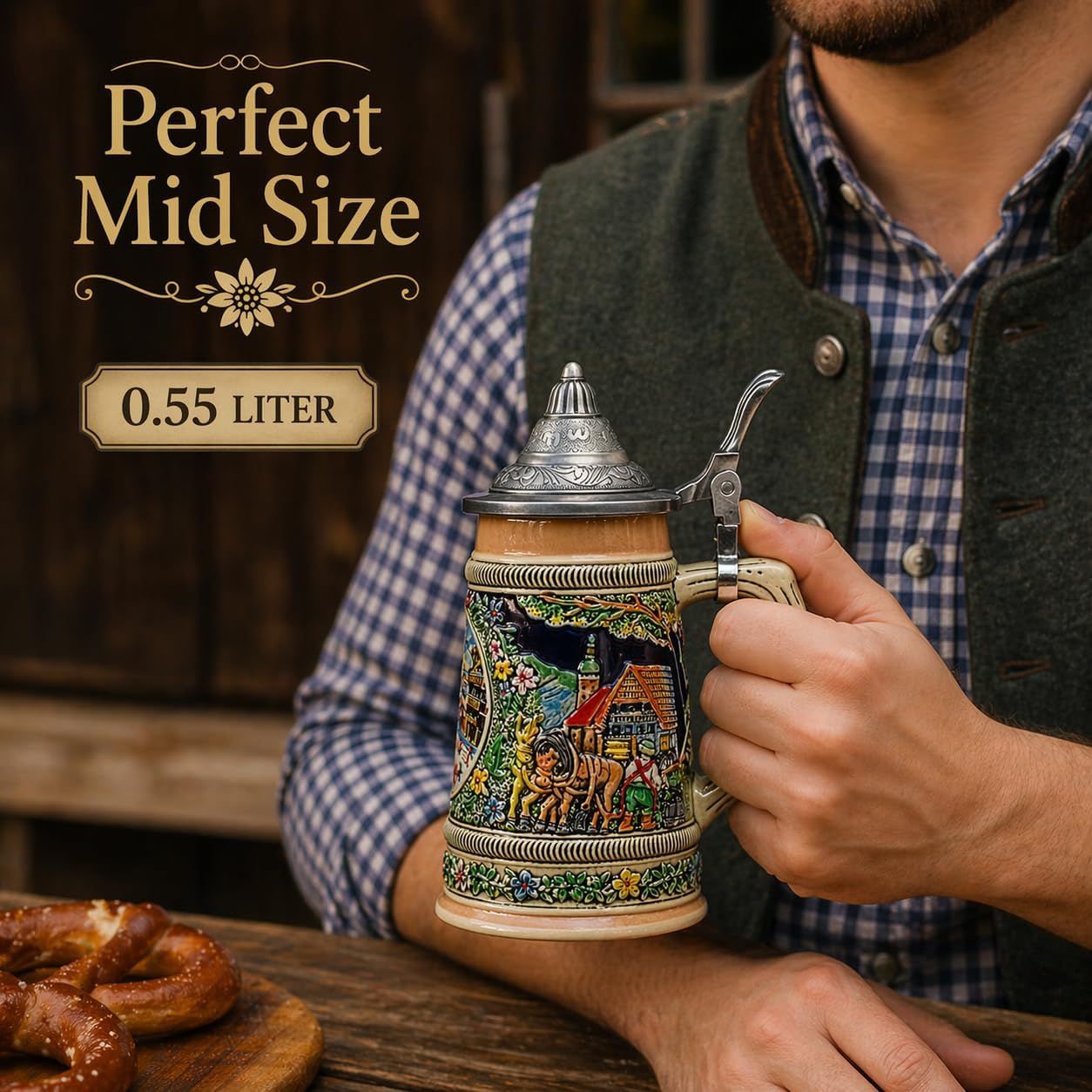
A ceramic beer stein — that’s a drinking mug, usually with a hinged lid, made from stoneware or earthenware clay — has been a German craft staple for centuries. What’s changed in recent years is how buyers use them: less as daily drinkware, more as an annual gifting ritual. If you’re already buying one or two seasonal steins a year as event prizes, host gifts, or collector additions, you’re in the right place. This guide is for buyers who know roughly what they want but are weighing the tradeoffs between designs, materials, and quality tiers before committing to a repeat purchase. We’ve researched the field extensively — aggregating owner reviews, published craft histories, and material-care guidance — so the comparisons below reflect real buyer experience, not marketing copy.
Why Seasonal Scene Steins Have Become a Repeat-Gift Category
The appeal isn’t hard to decode. As Atlas Obscura’s documentation of Oktoberfest material culture notes, the beer stein carries a specific symbolic weight in German-American celebration: it’s functional enough to feel practical, decorative enough to display, and regional enough to signal that the giver did their homework. That combination makes it unusually durable as a gift category — people don’t tire of receiving them the way they might a scented candle or a generic bar accessory.
The seasonal dimension adds a collector’s logic on top. Reviewers of Herbst (autumn) and Winter scene steins consistently describe buying different editions annually — one buyer explicitly mentions awarding them as prizes at an Oktoberfest curling event every year, rotating the design so repeat winners receive something new. That’s a gifting system, not a one-off purchase, and it changes how you should evaluate each piece.
DW’s coverage of Bavarian craft traditions reinforces why the design vocabulary matters to buyers in this category: scene steins that depict recognizable regional imagery — hunt scenes, alpine villages, harvest motifs — tap into a folk-art tradition that collectors and heritage enthusiasts treat as culturally meaningful rather than generic kitsch. The gap between a stein that reads “authentic” and one that reads “souvenir shop” is mostly in the execution of that imagery, which is where molded relief versus hand-applied decoration becomes a real decision point.
The Core Tradeoff: Molded Relief vs. Hand-Painted vs. Engraved
If you’re building a recurring purchase strategy, understanding this spectrum saves money and prevents disappointment.
Molded relief designs are pressed into the clay before firing — the image is literally part of the body of the stein, not applied afterward. At the $25–$60 price tier, this is usually the most durable decorative method because there’s no surface coating to chip or fade. The HAUCOZE Eagle and Coat of Arms steins are a strong example: owners consistently praise the color saturation and the crispness of the heraldic detail, which holds up because the design is structural rather than superficial. The tradeoff is that molded relief at this price is factory-produced, not hand-finished — you’re getting consistency and repeatability, which is exactly right for a prize-table stein but not what a serious collector means when they say “hand-carved.”
Hand-painted ceramics at the $80–$200 range introduce genuine variation between pieces. Smithsonian Magazine’s coverage of German folk art notes that regional hand-painting traditions — particularly the floral and figural styles associated with Bavarian and Erzgebirge workshops — are explicitly valued because no two pieces are identical. If you’re buying for a collector who notices brushstroke quality, this tier matters. If you’re buying six identical steins for an event, it’s the wrong tool.
Engraved glass steins occupy a separate category that deserves a direct warning: the HomeWetBar personalized engraved glass stein has generated significant negative reviews specifically around lid corrosion and pitting after normal use. Glass bodies with pewter hardware appear to be materially more vulnerable to moisture-driven oxidation than ceramic bodies with comparable hardware. At similar price points, the ceramic-bodied options consistently outperform engraved glass on durability. If personalization is the goal, ceramic with a transfer-printed name panel holds up better in long-run owner reports.
By the numbers — seasonal scene stein quality tiers:
| Tier | Body material | Decoration method | Typical repeat-gift durability |
|---|---|---|---|
| $18–$45 | Stoneware / earthenware | Molded relief + glaze | High — consistent, low fade risk |
| $50–$90 | Ceramic | Hand-painted or relief + hand finish | Medium-high — variation between pieces |
| $60–$100 | Glass | Laser-engraved | Lower — lid hardware corrosion reported |
| $80–$150 | Handmade stoneware | Thrown + hand-finished | High — built for daily use |
The Helko Werk Case: When “Collectible” and “Everyday” Overlap
The Helko Werk handmade stoneware stein occupies an interesting position in this market. Owners report using it daily — not just for seasonal occasions — which positions it differently from purely decorative scene steins. The Spruce’s guidance on drinkware materials notes that high-fired stoneware is among the most inert and food-safe ceramic categories available, which explains why owners reach for it habitually rather than keeping it on a shelf.
For the buyer building a recurring gift program, this creates a fork in the road: are you buying pieces that will be used or pieces that will be displayed? The Helko Werk answers “used.” The HAUCOZE seasonal scene steins answer “both, leaning toward display.” Neither is wrong — but conflating the two leads to disappointed recipients who either feel guilty drinking from something they perceive as decorative, or frustrated by a decorative piece that’s too fragile for the dishwasher.
The decision rule here: if the recipient has a display cabinet and buys German collectibles intentionally, go scenic and seasonal. If they’re a daily drinker who wants something that feels handmade without being precious, the handmade stoneware category is the smarter fit.
Pewter Lid Quality: The Detail That Determines Long-Term Value
Pewter lids — the hinged metal tops that are a defining feature of traditional German steins — are where quality differentiation shows up most sharply in owner reviews, and where the glass-bodied stein failures become instructive.
The corrosion and pitting reported on the HomeWetBar glass stein’s pewter lid appears to result from moisture trapped at the hinge joint after washing. Pewter itself is an alloy of tin with small amounts of copper and antimony; German Culture’s overview of traditional stoneware notes that historically, German pewter stein lids were made to a standardized craft quality that resisted tarnishing under normal use. The mass-market equivalent — particularly on glass-bodied steins — often uses lower-grade alloys or thinner castings that don’t shed water as effectively.
Owners of HAUCOZE ceramic-bodied steins have flagged a different, less serious issue: the pewter lid on the 1.0L version doesn’t open wide enough out of the box on some units. This is a fit-and-finish problem, not a material failure — the hinge pin can be gently worked open, and several owners report the action loosens with normal use. It’s worth knowing before you gift it, so the recipient isn’t confused by a lid that feels stuck.
Practical rule: for any stein with a pewter lid, hand-washing and drying the lid joint separately is the single best longevity practice, regardless of whether the manufacturer claims dishwasher safety. The Spruce’s drinkware care guidance consistently recommends this for metal-hardware items.
Frequently Asked Questions
Will the pewter lid corrode or pit after regular washing? The risk is real on lower-grade alloys, particularly on glass-bodied steins with thinner lid castings — the HomeWetBar engraved glass stein has produced documented corrosion reports from owners. Ceramic-bodied steins with quality pewter lids are significantly less prone to this, but hand-washing and drying the hinge area is the safest practice for any lid-equipped stein.
Are these steins safe to drink from out of the box, or do they need washing first? Wash before first use — this is standard guidance for all ceramic drinkware. Reviewers of the HAUCOZE 1.0L stein flagged finding white powder residue inside before first use; this is likely kiln dust or packaging material, not a glaze defect, but it underscores why a thorough rinse matters. High-fired stoneware like the Helko Werk is food-safe once clean.
What is the actual usable volume — does it fit a full 12oz can? Most steins marked “0.5L” hold approximately 16–17 fluid ounces to the brim, which comfortably fits a standard 12oz pour with head room. The 1.0L versions hold roughly 34 fluid ounces, which is generous for a pint pour but can feel unwieldy as a daily-use vessel. If the stein is primarily for display or occasional use, 0.5L is the more giftable size.
Are seasonal scene steins produced in limited editions each year or always available? Most mass-market seasonal steins — including the HAUCOZE Herbst and Winter designs — are catalog products rather than true annual limited editions. They’re available year-round from major retailers, though stock on specific colorways can deplete around peak gifting seasons. If you’re buying for a collector who values scarcity, look for explicitly numbered editions from regional German producers; the mainstream scenic steins are not investment pieces in that sense.
Is the ceramic body dishwasher safe? Most glazed stoneware bodies tolerate dishwasher cycles, but the lid hardware almost universally doesn’t. The safe approach — confirmed by The Spruce’s drinkware care guidance — is to remove the lid entirely if it detaches, or hand-wash the full stein if the lid is fixed. Running pewter through a dishwasher accelerates tarnish and can warp thinner castings.
How do molded relief designs compare visually to hand-carved or hand-painted artwork at this price point? Honestly, at arm’s length on a shelf, a well-executed molded relief glaze reads comparably to hand-painted work to non-specialist eyes. Up close, the difference is clear: hand-painted pieces show brushwork variation; molded relief shows uniform texture. For prize-table or host-gift use, molded relief at the $25–$60 tier delivers strong visual impact per dollar. For a collector who will examine the piece, hand-painted or hand-finished work at the $100+ tier is the credible choice.
The If/Then Decision Framework
You’ve now got enough signal to match buyer to stein. Here’s the clean version:
- If you’re buying annual Oktoberfest or holiday event prizes for a rotating group → molded relief ceramic in seasonal scenes, 0.5L, budget $25–$55 per unit. Consistent, repeatable, no fragility concerns.
- If you’re gifting a German-heritage enthusiast who displays pieces intentionally → hand-painted or hand-finished scenic ceramic, 0.5L, budget $80–$150. The variation between pieces becomes a feature, not a bug.
- If the recipient is a daily drinker who values handmade over decorative → handmade stoneware, prioritize the Helko Werk tier. Built for use, not the shelf.
- If you’re considering a personalized engraved glass stein → reconsider unless you can confirm lid hardware quality. Owner-reported corrosion on glass-bodied options at this price tier is a meaningful quality signal, not an outlier.
- If budget is fixed and visual impact is the primary goal → the HAUCOZE Eagle and Coat of Arms designs consistently earn praise for color and detail at accessible price points, with the caveat to hand-wash the lid joint.
The seasonal scene stein market rewards buyers who match the piece to the recipient’s actual use pattern — collector, daily drinker, or event-prize recipient — rather than defaulting to the most visually impressive option. Get that match right, and you have a gift category worth returning to every year.