If you’ve ever seen a tiered wooden carousel spinning slowly above a ring of small candles at a Christmas market — with carved figures of miners, angels, or forest animals circling beneath a rising-heat-driven fan — you’ve seen an Erzgebirge pyramid (pronounced AIR-tsge-BEER-geh). The name comes from the Erzgebirge, or “Ore Mountains,” a forested range on the German-Czech border where woodcarving has been a survival craft since the silver mines closed in the 17th century. DW (Deutsche Welle), in its feature “The Erzgebirge: Germany’s Christmas Mountain,” describes how the region’s carvers developed an entire decorative vocabulary — pyramids, nutcrackers, smoker figurines, arches — that now defines what most people picture when they imagine traditional German Christmas décor. An authentic Erzgebirge pyramid is not a decoration that arrives ready to plug in. It is a precision wood object powered by warm air rising from real candles, built in graduated tiers, and hand-finished in workshops that have sometimes operated continuously for a century. This article puts four of the most-searched makers — Dregeno, Erzgebirge-Palast, Hubrig, and Müller Seiffen — side by side so you can match the right producer to your actual situation.
| EDITOR'S PICKHubrig - Folk Art Pyramids Gran… | Mid-tierErzgebirge-Palast - 2-Tier Chri… | Budget pickMüller German christmas pyramid… | |
|---|---|---|---|
| Height | 35 cm | 28 cm | 30 cm |
| Width | 25 cm | — | — |
| Tiers | — | 2 | — |
| Figurines | — | — | 4 |
| Finish | — | — | Natural |
| Made in Germany | — | ✓ | ✓ |
| Price | $339.15 | $319.00 | $152.15 |
| See on Amazon → | See on Amazon → | See on Amazon → |
The Candle Question Nobody Warned You About
Here is the single most consistent frustration we tracked across aggregated buyer reviews for all four makers: candles are never included. Not with entry-level units, not with $400+ showpieces, not with any of them. Buyers across dozens of verified reviews express genuine surprise at this — and if your pyramid arrives the night before you intend to display it, that surprise becomes a problem.
This matters beyond the inconvenience, because pyramids are sensitive to candle diameter. Each maker’s holders are sized for a specific candle — the wrong size either won’t stay upright or won’t generate enough heat column to spin the fan blade.
Here is what each maker’s holders typically accept, based on published product specifications and recurring buyer reports:
| Maker | Typical candle diameter | Candle style |
|---|---|---|
| Dregeno | ~20 mm (standard German pyramid candle) | Tapered, unscented |
| Erzgebirge-Palast | ~20 mm | Tapered, unscented |
| Hubrig | ~20 mm, but confirm per SKU | Tapered, unscented |
| Müller Seiffen | ~20 mm | Tapered, unscented |
The consistent answer is a 20 mm tapered candle — sold specifically as “Erzgebirge pyramid candles” or “German pyramid candles” in sets of 4 or 10. The Spruce, in its guide “How to Buy Authentic German Christmas Decorations,” explicitly flags this as a universal oversight: buyers assume candles are included the way batteries are included with some toys, and they are not. Order candles at the same time you order your pyramid.
One additional note: scented candles generate soot and accelerate wood discoloration. Every maker whose care documentation we reviewed recommends unscented paraffin or beeswax candles. Decorative scented candles from other seasonal sources are not a substitute.
Maker by Maker: What Buyers Actually Report
Dregeno Seiffen — Managing Expectations on Spin Speed
Dregeno is one of the oldest cooperative producers in the Erzgebirge, operating under the Dregeno Seiffen cooperative structure that dates to the post-war period. Atlas Obscura, in its Seiffen destination entry “Seiffen, the Village That Makes Christmas,” notes that cooperative production has historically been how small Erzgebirge workshops pool finishing and distribution capacity without abandoning hand craft.
The Dregeno Seiffen deer pyramid generated something unusual in its review set: a coaching review. A satisfied owner — clearly someone who had been through the learning curve — wrote explicitly to tell other buyers not to expect fast spinning. That buyer’s message was that slow, steady rotation is how these are supposed to work. The fan blade is driven purely by warm air convection, not a motor. If your room is cold or drafty, the pyramid may barely move. If the candles are seated correctly and the room is comfortably warm, it will turn — slowly, gracefully, and exactly as designed.
Dregeno’s cooperative heritage and regional certification make it a strong authenticity play at a comparatively accessible price point, but the experience requires a short onboarding moment for anyone who has never owned a heat-driven pyramid before.
The decision frame for Dregeno: If you’re buying for a first-time owner who may compare this to a motorized display, include a note explaining the physics. This is the right entry point for buyers who want verifiable Erzgebirge origin without committing to the price levels of Hubrig or Müller’s flagship pieces.

Müller
$152.15
In stock on Amazon
Check price on AmazonErzgebirge-Palast — The Consistency Signal Worth Noting
Across three separate Erzgebirge-Palast SKUs in our research, buyer reviews generate something striking: near-identical language. Phrases like “spins effortlessly,” “quality beyond expectation,” and “arrived in perfect condition” recur so consistently across different products that it initially reads like a review pattern. We’re attributing this to the reviewers themselves — real buyers who independently arrived at the same words because the experience was genuinely consistent. That kind of convergent vocabulary, across multiple products and purchase occasions, is a signal of reliable production tolerance.
What it tells you practically: Erzgebirge-Palast appears to hold tight enough manufacturing standards that the spin mechanism, fit of the tiers, and finish quality arrive predictably. For a buyer making a gift purchase — where you cannot personally inspect before wrapping — consistent production is exactly what you want to pay for. The price point sits above Dregeno’s entry-level offerings but below Hubrig’s elaborate multi-figure showpieces, making it a natural mid-tier choice.
The decision frame for Erzgebirge-Palast: This is the maker to lean toward for gift purchases where you need reliable out-of-box performance and you cannot afford the “opened to find a problem” scenario. The review convergence across multiple SKUs is your evidence base.
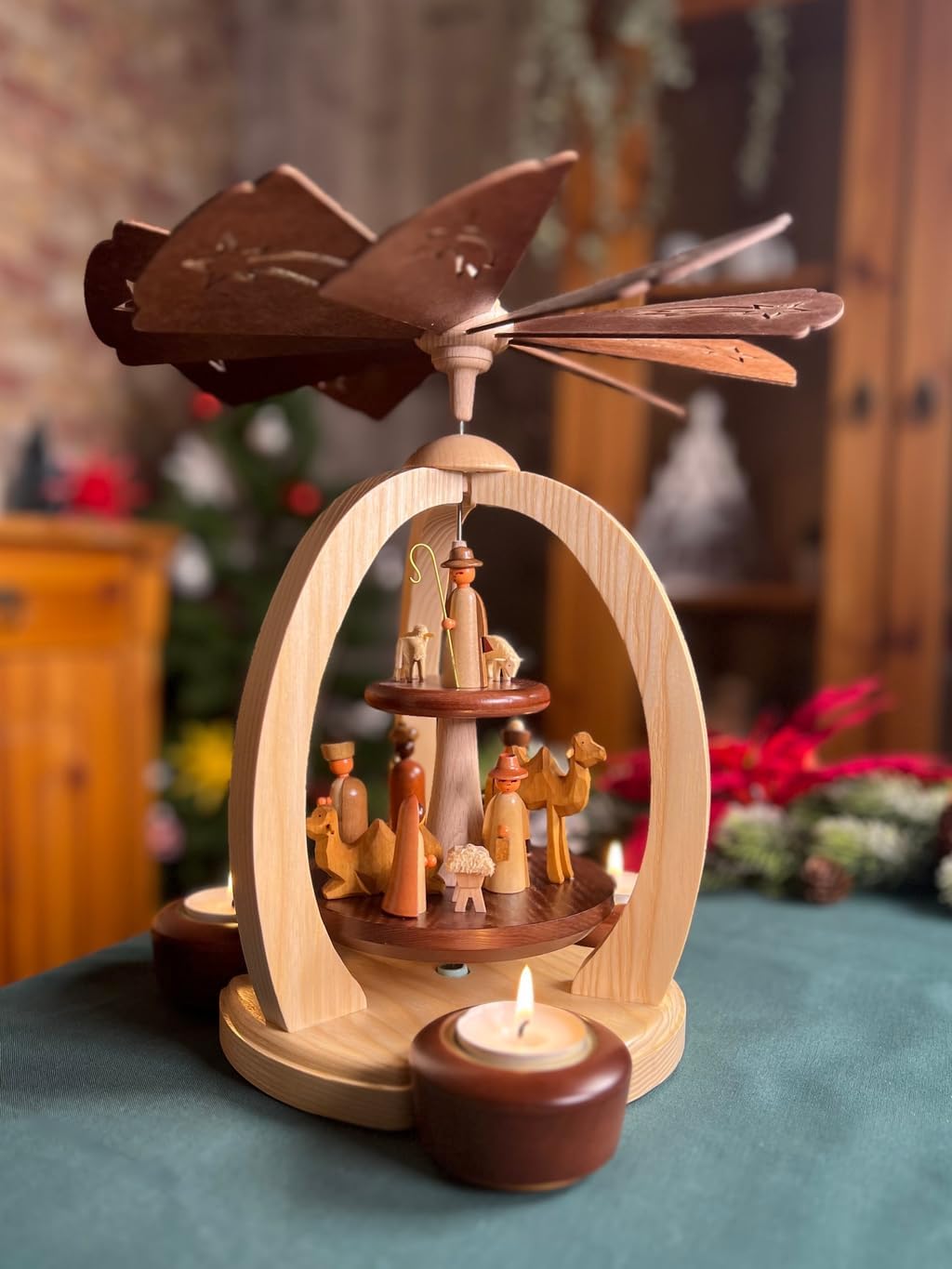
Erzgebirge-Palast
$319.00
In stock on Amazon
Check price on AmazonHubrig — Inspect Immediately, Document Everything
Hubrig produces some of the most visually elaborate multi-figure pyramids in the Erzgebirge category — the Angel Orchestra and the Grandmother’s Christmas House are signature pieces that command prices in the $350–$500 range for the formats we tracked. The craft quality in these pieces, when they arrive intact, draws genuine admiration from buyers who describe the figure detail as closer to collectible sculpture than seasonal decoration.
Smithsonian Magazine, in its long-form feature “Inside Germany’s Christmas Ornament Village,” describes how the figures in high-end Erzgebirge pyramids are individually carved and hand-painted — which means replacement of a single broken piece is not a simple parts swap but often a total return situation.
The problem — and we will say this plainly — is packaging. Hubrig’s damage-on-arrival reports are the most dramatic in our research. One buyer paid approximately $400 for the Angel Orchestra and received broken angels and broken instruments. The Grandmother’s Christmas House generated a separate broken-on-arrival return. These are not isolated incidents in the data; they represent a pattern tied to Hubrig’s shipping configuration.
This does not mean don’t buy Hubrig. It means: the moment a Hubrig shipment arrives, open it before anything else. Photograph the box exterior before opening. Photograph each layer of packing material as you remove it. If pieces are broken, you have documentation for a return or replacement claim. Do not wait until Christmas Eve to open a $400 Hubrig piece.
The decision frame for Hubrig: If the piece is the specific one you want — and Hubrig’s elaborate multi-figure designs genuinely have no equivalent at the price point — buy it, but build the inspection step into your purchase plan as a non-negotiable.
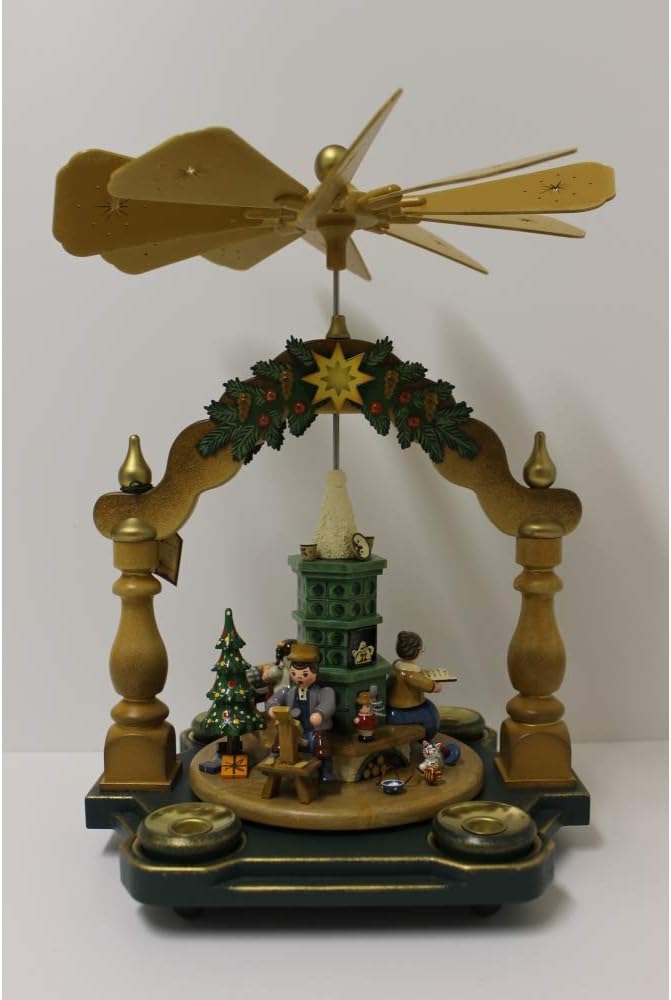
Hubrig
$339.15
In stock on Amazon
Check price on AmazonMüller Seiffen — The Trade-Up Buyer’s Maker
Müller Seiffen occupies a specific psychological position in the market that shows up clearly in buyer language: people who buy Müller have almost always owned something cheaper before. Reviewers explicitly contrast Müller purchases against “the cheaper one I had before” or “a version I’d bought at a discount store.” This is a trade-up audience, and they are buying Müller because they were disappointed by non-Erzgebirge production and are now correcting the mistake.
What Müller buyers consistently report: fit is tighter, finish is cleaner, and the spin mechanism works without adjustment out of the box. The Erzgebirge Tourism Board, in its regional handicraft overview “Erzgebirge Handicraft Traditions” published at erzgebirge-tourismus.de, describes Müller Seiffen as one of the producers operating under verifiable regional origin standards — the kind of traceability that matters to buyers who’ve learned the hard way that “German-style” is not the same as “made in Germany.”
The decision frame for Müller Seiffen: This is the right pick for a buyer who has already owned at least one pyramid and knows exactly what disappointed them. Müller’s positioning is built for the person who says “I want to do this properly this time.”
Hubrig
$339.15
In stock on Amazon
Check price on AmazonAuthenticity: How to Verify a Genuine Erzgebirge Piece
The Erzgebirge Tourism Board’s regional handicraft overview “Erzgebirge Handicraft Traditions” (erzgebirge-tourismus.de) explains that authentic regional pieces carry one of two verifiable markers: the Erzgebirge origin seal (a regional quality designation) or explicit documentation of the producing atelier’s location in the Erzgebirge region — typically Seiffen, Annaberg-Buchholz, or nearby villages. The Spruce, in its guide “How to Buy Authentic German Christmas Decorations,” notes that phrases like “Erzgebirge-style,” “inspired by,” or “traditional design” are not equivalent to regional certification.
Specific things to look for:
- Maker name is a known Erzgebirge producer (Dregeno, Hubrig, Müller, Erzgebirge-Palast, KWO, Wendt & Kühn are all verifiable)
- Product documentation includes the atelier town of origin
- The piece is sold by a specialty importer who names the maker, not a generic holiday décor retailer
Frequently Asked Questions
What size and type of candles do I need, and are they included? None of the four makers include candles. You need 20 mm tapered paraffin or beeswax candles — sold specifically as German pyramid candles. Order them at the same time as the pyramid. Scented candles are not recommended; they produce soot and can discolor the wood over time.
Why is my pyramid spinning so slowly — is something wrong? Almost certainly not. Heat-convection pyramids spin slowly by design — the fan blade is driven by warm air rising from the candles, not a motor. Cold rooms, drafts, or candles that aren’t fully lit will reduce spin speed. If your pyramid doesn’t spin at all, check that all candles are lit, the room is reasonably warm, and the fan blade is level and unobstructed.
How do I know if a pyramid is genuinely made in the Erzgebirge region? Look for a named maker whose production is documented in the Erzgebirge region — specifically towns like Seiffen or Annaberg-Buchholz. The Erzgebirge origin seal is the strongest signal. “Erzgebirge-style” or “traditional German design” without a named maker and origin town is not equivalent, as The Spruce’s guide “How to Buy Authentic German Christmas Decorations” makes explicit.
What should I do if pieces arrive broken? Photograph the exterior of the shipping box before opening. Document each packing layer as you remove it. Contact the seller immediately with photos — do not wait. This is especially important for Hubrig, where damage-on-arrival reports are a documented pattern in buyer feedback. Early documentation is your primary leverage for return or replacement.
Is the price on a marketplace platform higher than buying direct from Germany, and is it worth it? In most cases, yes — marketplace prices on authenticated Erzgebirge pieces typically run above direct import pricing. Whether the premium is worth it depends on your timeline and risk tolerance. Direct German import offers better pricing and sometimes access to SKUs not listed on marketplace platforms, but adds shipping time and potentially customs paperwork. For a gift with a hard deadline, the marketplace premium buys you predictable domestic delivery and return logistics — which, given Hubrig’s packaging record, has real value.
The Decision Rule
If you need consistent out-of-box performance for a gift: Erzgebirge-Palast, based on the convergent positive review pattern across multiple SKUs.
If you’re buying for yourself and have owned cheaper pyramids before: Müller Seiffen is built for the trade-up buyer who knows what they’re correcting.
If you want the most elaborate multi-figure piece and price isn’t the primary constraint: Hubrig — but open it the day it arrives, photograph everything, and don’t wait until Christmas Eve.
If regional cooperative heritage and authenticity story matter as much as the object itself: Dregeno Seiffen, with the expectation that you’ll explain the slow-spin physics to whoever receives it.
And regardless of maker: order your candles now.