The Hofbräuhaus Glass Stein vs. Pewter-Lid Ceramic: Which Beer Mug Is Right for Your Purpose
If you’ve ever been handed a heavy, one-liter mug at a Bavarian beer hall and wondered what makes it different from the decorative steins on collector shelves — you’re already asking the right question. A stein (short for Steinkrug, German for “stone jug”) is a handled drinking vessel, traditionally made of stoneware or glass, often fitted with a hinged lid. That lid, historically cast from pewter — a tin-based metal alloy — was introduced in 14th-century Germany partly as a hygienic measure during plague outbreaks, a detail covered in Smithsonian Magazine’s archive piece “The Long, Foamy History of the Beer Stein.” Today the format splits into two distinct product categories that serve very different buyers: the glass stein, built for active use and authentic pub experience, and the pewter-lid ceramic stein, which straddles the line between functional drinkware and collectible display piece. This guide will help you identify which one belongs in your situation — and what the real tradeoffs are before you commit.
| EDITOR'S PICK0.55L German Beer Steins with L… | Mid-tierHAUCOZE Beer Stein Mug German C… | Budget pick1 Liter HB "Hofbrauhaus Munchen… | |
|---|---|---|---|
| Capacity | 0.55L | 0.6L | 1 Liter |
| Material | Ceramic | — | Glass |
| Lid type | — | Pewter | — |
| Design | Winter scene | Coats of arms | HB dimpled |
| Brand shown | — | HAUCOZE | Hofbrauhaus |
| Price | $67.89 | $49.98 | $24.90 |
| See on Amazon → | See on Amazon → | See on Amazon → |
What You’re Actually Comparing: Two Different Jobs
At a surface level, both product types hold liquid and look appropriately German. Below the surface, they’re built for different moments.
The Hofbräuhaus Glass Stein: Authenticity and Active Use
The Hofbräuhaus glass stein — particularly the official HB-marked version — is designed to replicate the exact vessel used at the Hofbräuhaus München. Atlas Obscura’s place entry on Hofbräuhaus München documents the brewery as a 16th-century royal institution turned iconic public beer hall, and the glass Masskrug it popularized remains the reference standard for anyone who cares about experiential authenticity. The glass construction means you can see the pour, the head, and the color — a sensory feature serious beer drinkers consistently cite. Owners who’ve visited Munich and later ordered these online report that the weight, thickness, and embossed HB logo match what they drank from at the source. One reviewer described returning to the product 31 years after their first Hofbräuhaus visit and confirming the match. That’s a durable authenticity signal.
DW (Deutsche Welle), in its culture feature “Bavaria’s Beer Culture: From Monastery to Masskrug,” notes that the lidless glass Masskrug became the dominant hall vessel precisely because its transparency let servers and drinkers assess beer quality at a glance — a practical feature that the opaque ceramic body cannot replicate.
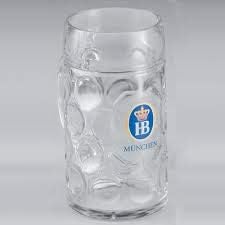
1
$24.90
In stock on Amazon
Check price on AmazonThe Pewter-Lid Ceramic Stein: Visual Presence and Gift Impact
The pewter-lid ceramic stein — typified by mid-market brands like HAUCOZE and premium options like Helko Werk stoneware — prioritizes visual presence and gift impact. The painted or relief-decorated exterior, the satisfying thunk of a weighted pewter lid, and the ceramic body’s superior thermal retention all serve a slightly different audience: the person who wants a table centerpiece that also functions as a vessel, or the gift-buyer who needs something that photographs beautifully and arrives looking ceremonial.
The decorated stoneware stein became culturally associated with German heritage because of its visual distinctiveness, as documented in germanculture.com.ua’s reference article “Beer Steins: Symbols of German Tradition” — the ceramic form reads as authentically German to anyone without direct Munich experience, making it the stronger choice for heritage gifting contexts.
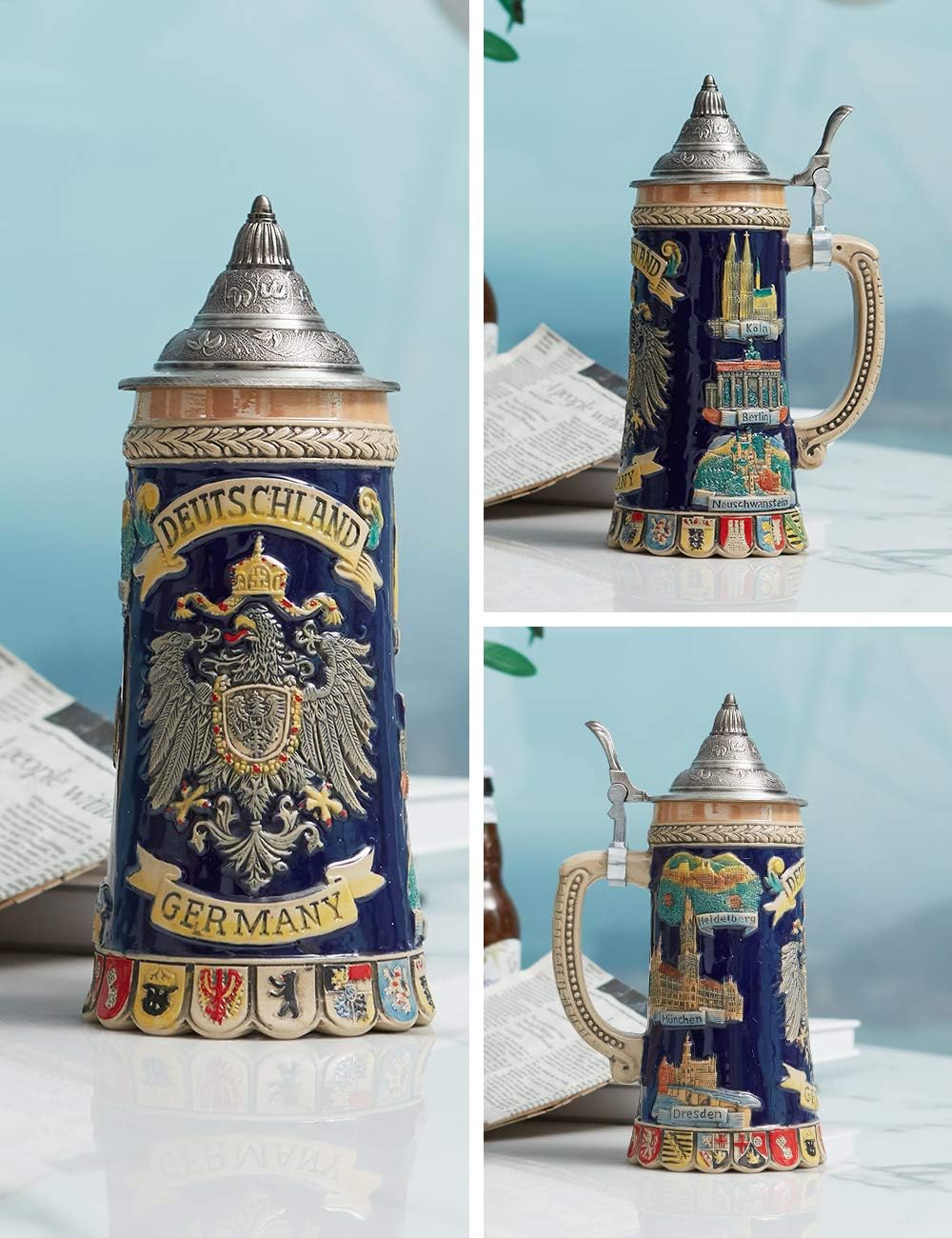
HAUCOZE
$49.98
In stock on Amazon
Check price on AmazonPremium Collector Steins: The Heirloom Category
At the upper end of the ceramic format sits individually crafted or small-batch stoneware — exemplified by the Helko Werk stoneware stein. Sparse in consumer reviews but described by owners as “the real thing” and notable for substantial heft, this category targets the collector-adjacent buyer or the recipient who will research what they’ve received. Smithsonian Magazine’s overview of beer stein collecting notes that pieces with documented provenance, regional craftsmanship markers, or individually numbered certificates occupy a distinct market tier from mass-produced commemoratives. If a stein will be placed on a display shelf, referenced by guests, and potentially passed down, the premium ceramic category is where to look.
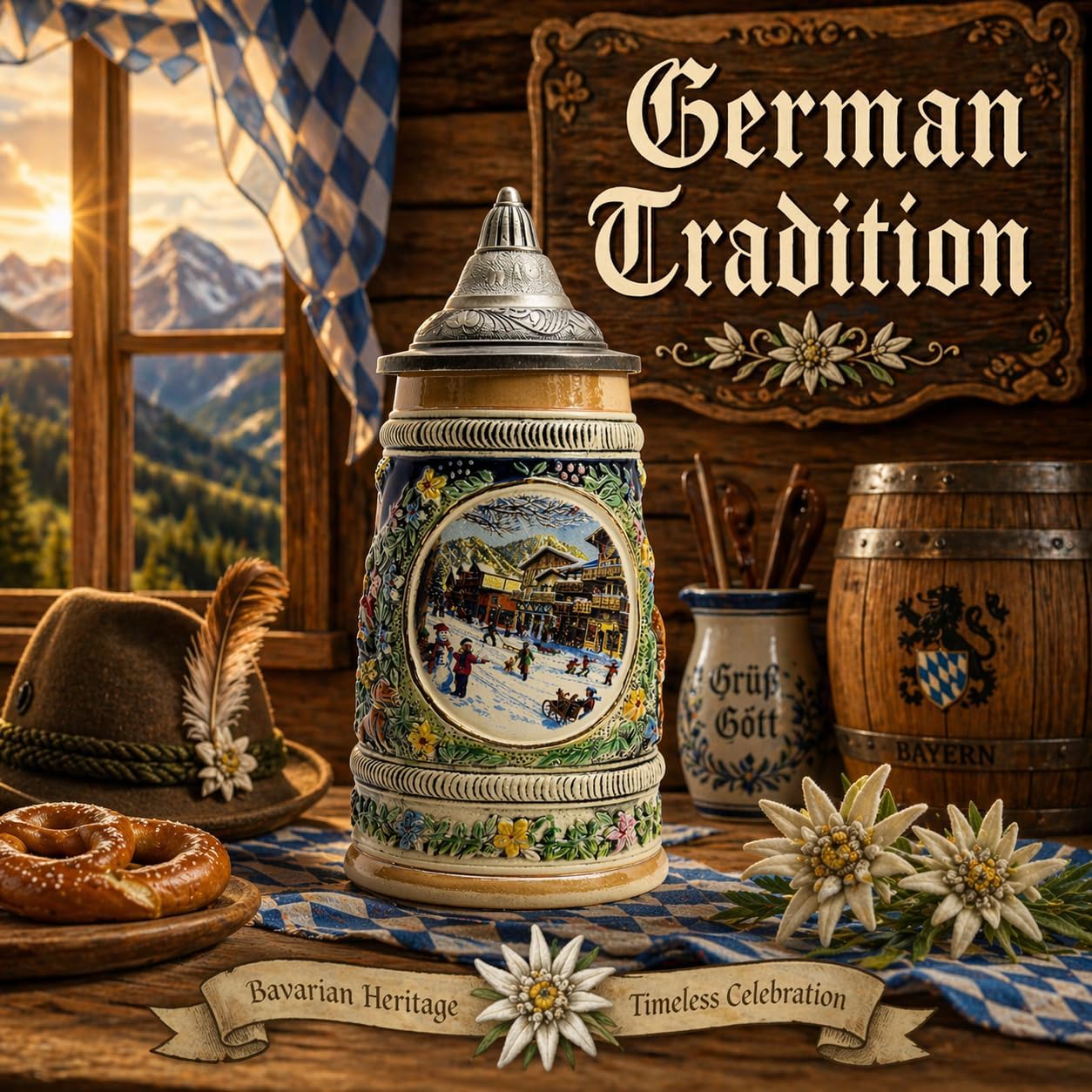
0.55L
$67.89
In stock on Amazon
Check price on AmazonDurability and Real-World Use: What Owners Actually Report
Here’s where the glass stein earns its reputation in ways that might surprise first-time buyers.
Owners of the HB Hofbräuhaus glass stein consistently describe it in terms that are almost physical in enthusiasm — words like “sturdy and tough,” references to “hitting them together pretty hard for toasts” without breakage. The thick-walled construction of authentic Munich-style glass steins is not decorative; it’s engineered for exactly this kind of abuse. As germanculture.com.ua’s reference article on German beer culture notes, the traditional Masskrug is designed to survive the aggressive clinking (Prost) rituals of communal drinking. Aggregated owner accounts confirm the pattern: these hold up to party conditions that would shatter standard barware.
Ceramic steins occupy different durability territory. The HAUCOZE ceramic stein draws consistent praise for visual detail and gift presentation, but the ceramic body is inherently more vulnerable to chipping on edges and rims than thick glass. More importantly for gift-buyers: at least one owner reported finding white powder residue inside a new ceramic stein and washing it twice before use. This is a known manufacturing artifact from kiln-firing and glazing — not a contamination issue — but any ceramic stein going into someone else’s hands should be hand-washed before first use. This is not unique to one brand; it applies across kiln-fired ceramics generally.
Capacity and care at a glance:
| Format | Capacity (typical) | US oz equivalent | Lid material | Dishwasher-safe? | 1 — $24.90 |
|---|---|---|---|---|---|
| HB Glass Stein (full Masskrug) | 1.0 L | ~33.8 oz | None (lidless) | Generally yes | 1 — $24.90 |
| HB Glass Stein (half liter) | 0.5 L | ~16.9 oz | None (lidless) | Generally yes | 1 — $24.90 |
| Ceramic w/ Pewter Lid (mid) | 0.5 L | ~16.9 oz | Pewter — hand-wash only | Body: maybe; lid: NO | HAUCOZE — $49.98 |
| Ceramic w/ Pewter Lid (small) | 0.3 L | ~10.1 oz | Pewter — hand-wash only | Body: maybe; lid: NO | HAUCOZE — $49.98 |
| Premium Stoneware w/ Pewter Lid | 0.5–1.0 L | ~16.9–33.8 oz | Pewter — hand-wash only | Body: NO; lid: NO | 0.55L — $67.89 |
Capacity conversions use the standard metric-to-US fluid ounce ratio (1 L = 33.814 fl oz). “Rated capacity” typically reflects volume to the brim; practical fill is approximately 80% of rated capacity to allow for head.
Gift-Giving, Display, and the Collectibility Question
If you’re buying for yourself, the use-case logic above mostly settles the question. If you’re buying as a gift — for a Christkindlmarkt exchange, a milestone birthday, a corporate Oktoberfest event — the calculus shifts in ways worth working through carefully.
The ceramic pewter-lid stein wins on presentation by a significant margin. HAUCOZE products generate gift reviews focused on recipient reactions: delight at the weight, the artwork, the sense that this is a “real” German stein. DW’s culture feature on Bavarian beer culture notes that the decorated stoneware stein became culturally iconic through its visual distinctiveness — the ceramic format signals German heritage to anyone who hasn’t spent time in Munich.
Where things get complicated: personalized engraved glass steins. The review picture here is polarizing, and editorial honesty requires stating it directly. Some buyers find laser-engraved text on glass elegant and understated. Others report the engraving is nearly invisible under normal lighting. There is also a documented issue with pewter lid corrosion after normal use on at least one engraved glass stein model — a product quality problem that makes us cautious about recommending personalized glass steins with pewter lids for recipients who plan regular use. If personalization matters and the stein will be used rather than displayed, engrave without the lid, or choose a gift-boxed ceramic format instead.
A flagged listing issue: At least one etched decorative glass stein has drawn a review specifically calling out a product listing photo that appears to show two steins but delivers only one. Smithsonian Magazine’s coverage of collectible purchasing more broadly identifies photography that creates quantity ambiguity as a recurring friction point in heritage gifting categories. Buyers considering any decorative stein where quantity is visually ambiguous should confirm the item count explicitly before purchasing.
Seasonal Collectibles and the Numbered Series Question
This comes up enough in buyer questions to warrant direct treatment. Some ceramic steins — particularly those tied to Oktoberfest, Advent, or annual brewery releases — are issued as limited or dated editions, but “limited” means different things in different contexts.
True numbered series (e.g., a stein marked 47 of 500, with a certificate) are collectibles in the traditional sense, with documented secondary-market behavior. Annual Oktoberfest steins from Munich’s six official breweries — Augustiner, Hacker-Pschorr, Hofbräu, Löwenbräu, Paulaner, and Spaten — change design each year but are not individually numbered; they are year-dated and produced in substantial volumes. As germanculture.com.ua’s article on German stein collecting traditions explains, year-dated steins accumulate value primarily as sets rather than as individual pieces, and vintage examples from the 1970s through 1990s command meaningfully higher prices on the secondary market than recent issues.
For the buyer deciding between a seasonal ceramic and a classic glass: if this is about building a collection, ask specifically whether the piece is individually numbered with documentation. If the answer is no, treat it as a year-dated commemorative — pleasant and era-specific, but not a numbered collectible in the investment sense.
Frequently Asked Questions
Are the pewter lids on ceramic steins food-safe and dishwasher-safe? Modern pewter used in stein lids is lead-free and considered food-safe by current EU and US standards — the historical concern about lead applies to antique pieces, not contemporary production. However, pewter lids are definitively not dishwasher-safe. Heat and detergent cycles oxidize the metal, causing pitting and discoloration. Hand-wash only, dry immediately.
What is the actual capacity of a 0.6-liter stein in US fluid ounces? A 0.6-liter stein holds approximately 20.3 US fluid ounces — about 2.5 standard US 8 oz cups. Rated capacity is typically measured to the brim; a practical pour fills to about 80% of rated capacity, leaving room for head. So a “0.6 L” stein realistically delivers around 16 oz of liquid per pour.
Can you actually drink from a decorative ceramic stein, or is it display-only? Most decorated ceramic steins sold in the $30–$120 price range are functional drinkware, not purely decorative. The relevant distinctions: Is the interior glaze food-safe? (Yes, for reputable brands.) Is the stein sealed properly? (Wash before first use regardless.) Display-only pieces are typically labeled as such or priced as collectibles with permanently sealed lids. When in doubt, confirm with the seller before gifting to a recipient who plans to use it.
How do seasonal collectible steins differ year to year — are they part of a numbered series? Year-dated steins change artwork or colorway annually, but most commercial seasonal steins are not individually numbered. True numbered series include documentation. Annual Oktoberfest steins from Munich’s official breweries are dated but not numbered, produced in quantity. Treat them as year-specific commemoratives rather than numbered collectibles unless explicitly documented otherwise.
Does personalized engraving show up clearly on glass steins? Based on aggregated buyer accounts, visibility is inconsistent and lighting-dependent. Laser engraving on clear glass is subtle by nature — some buyers find it elegantly understated; others find it frustratingly invisible. If visibility matters for your gifting purpose, request a sample photo under normal lighting before ordering, or choose a format — ceramic, deep-relief etched — where the personalization is more legible.
Is white residue inside a new ceramic stein normal and safe? Yes — white powder or residue inside a new ceramic stein is a known manufacturing artifact from kiln-firing and glazing. It is not a contamination issue, but it should be washed out before first use. Wash with warm water and dish soap, rinse thoroughly, and allow to dry completely. If residue persists after two washes, contact the seller. This is a routine quality-control note, not a safety concern.
The Decision Rule
-
If the stein will be used at parties or regular occasions — and especially for someone who has actually been to Munich — the HB Hofbräuhaus glass stein is the right call. It is durable, authentic, and the vessel most likely to be raised repeatedly.
-
If it is a gift, a display piece, or part of a Bavarian-themed table setting — or if the recipient values visual detail and heritage aesthetics over pub functionality — a quality ceramic stein with a pewter lid delivers more presence and perceived ceremonial value.
-
If personalization is the goal, be cautious with engraved glass and pewter-lid combinations. Engraved-only glass or personalized ceramic formats are safer choices based on what owners report.
-
If you are building a collection with secondary-market intent, confirm whether the piece is individually numbered with documentation before treating it as an investment rather than a commemorative.
The stein category rewards knowing what job you are hiring the piece to do. Get that right first, and the rest of the decision follows naturally.