A nutcracker is, at its most basic, a decorative wooden figure — typically a soldier, king, or storybook character — with a lever mechanism in its back that (in the functional versions) can actually crack a walnut. The design became famous through Tchaikovsky’s 1892 ballet, but its roots go back centuries to woodcarvers in the Erzgebirge (AIR-tsge-BIR-guh), a mountain range straddling the German-Czech border where craftspeople turned timber into income during long mining winters. Today, two very different kinds of nutcrackers share shelf space in gift shops and online marketplaces: mass-produced licensed figures from brands like Kurt Adler, and hand-carved workshop pieces from Erzgebirge ateliers. If you’re buying one — or advising someone who is — the choice between them is less about taste and more about matching the object to the occasion, the recipient, and what you’re willing to spend. This guide lays out exactly how to make that call.
| EDITOR'S PICKSeiffener Volkskunst German nut… | Mid-tierSeiffener Volkskunst German Nut… | Budget pickKurt Adler Hollywood Wizard Nut… | |
|---|---|---|---|
| Height | 15 in (37 cm) | 11 in (28 cm) | 15 in |
| Origin | Erzgebirge, Germany | Erzgebirge, Germany | — |
| Maker | Seiffener (SV) | Seiffener (SV) | — |
| Model No. | SV 11205/2 | SV 11302/2 | — |
| Motif | Soldier | Hussar | Hollywood Wizard |
| Includes Owl | ✗ | ✗ | ✓ |
| Price | $154.99 | $149.99 | $66.40 |
| See on Amazon → | See on Amazon → | See on Amazon → |
What You’re Actually Comparing
Let’s be precise about who Kurt Adler is before we treat it as a category. Kurt Adler, Inc. is a New York-based holiday décor company founded in 1946, known primarily for licensed pop-culture ornaments and seasonal figurines. Their nutcracker line leans heavily on character licensing — think sports teams, movie franchises, military branches, and entertainment properties. As the German Culture reference portal (germanculture.com.ua) notes in its overview of German folk art and craft traditions, this is a fundamentally different commercial lineage than the Erzgebirge craft tradition, where nutcracker production has been a cottage and small-workshop industry since at least the 17th century.
The Erzgebirge region, as the Erzgebirge Tourism Board documents in its Volkskunst aus dem Erzgebirge regional craft overview (erzgebirge-tourismus.de), was designated a UNESCO World Heritage site in 2019 in recognition of its mining and craft culture. The nutcracker is one of its signature exports, produced today by a range of makers from mass-volume manufacturers down to single-craftsperson ateliers producing signed, limited editions. DW (Deutsche Welle), in its reporting on the UNESCO designation, noted that authentic Erzgebirge woodcraft carries a regional quality mark — the “Echt Erzgebirge” (Real Erzgebirge) label — that distinguishes genuine regional work from imitations produced elsewhere and marketed under the region’s name.
So the comparison is really this: character-licensed décor vs. regional craft heritage. Both are legitimate product categories. Neither is inherently wrong. But they serve different buyers, and conflating them is one of the more common mistakes mid-level buyers make.
The Decision Frame: Four Questions That Determine the Right Pick
Before we get into specific tiers and price bands, run any pending purchase through these four filters.
1. Is the recipient a collector or a decorator?
Collectors — meaning people who track maker marks, research provenance, and care about secondary-market value — are not the right audience for Kurt Adler. Smithsonian Magazine’s coverage of Erzgebirge Christmas traditions (smithsonianmag.com) notes that serious collectors specifically seek pieces that can be traced to named ateliers or signed by individual carvers. A licensed character nutcracker has no meaningful collector path; a signed KWO (Kunstgewerbe-Werkstätten Olbernhau) limited edition does.
Decorators are different. Someone styling a corporate holiday installation, a Christkindlmarkt booth, or a hotel lobby who needs visual impact at a manageable per-unit cost may find Kurt Adler’s licensed designs genuinely useful — they’re recognizable, they hold up to repeat handling, and their price point allows for multiples without budget stress.
2. What’s the occasion’s shelf life?
Novelty gifts — stocking stuffers, white elephant exchanges, “fun” office presents — have a natural expiration. Nobody expects a gag gift to survive fifteen years. Kurt Adler figures are built to this expectation: they’re resin-composite or low-grade wood with painted detail, designed for a few seasons of display.
Milestone occasions — anniversaries, retirements, first homes, heirloom gifts to children — call for something with a longer arc. The Spruce, in its guide to identifying authentic German Christmas decorations (thespruce.com), emphasizes that genuine hand-carved pieces show tool marks, slight asymmetry, and natural wood grain variation that mass production cannot replicate. These are the signals that tell a recipient — twenty years later — that someone spent real thought on this purchase.
3. What does the price need to communicate?
This is blunter than most buying guides will say, but it matters: a gift signals its own value. A $35 Kurt Adler figure in its original box communicates a certain register. A $280 signed Steinbach or a $450 hand-carved KWO limited edition in a maker-labeled gift box communicates something categorically different — and the recipient can usually tell, even if they can’t name why.
If the relationship and occasion call for the higher register, don’t try to bridge it with a premium-looking mass-market piece. The “uncanny valley” of décor — something that looks expensive but isn’t — consistently lands worse than an honest lower-priced choice made with confidence.
4. Is authenticity verifiable?
For any purchase above $150, this question becomes load-bearing. The German Culture reference portal (germanculture.com.ua) notes that authentic Erzgebirge pieces should carry either the “Echt Erzgebirge” regional quality seal, a maker’s mark on the base, or documentation of the producing atelier. Without these, you’re buying on aesthetics alone — which is acceptable at the novelty tier, but a real risk at the collector tier.
Kurt Adler pieces are branded and licensed, which means authenticity is verifiable in a different sense: you’re confirming the license rather than craft origin. That’s a much simpler verification task, and the packaging itself does most of the work.
Tier-by-Tier Breakdown: Which Nutcracker Belongs in Which Situation
Budget Tier: Licensed Character Figures ($18–$65)
Kurt Adler is the dominant name here, and for specific use cases it is genuinely the right call — not a fallback, but a first choice.
Where it wins: If your recipient is a passionate fan of a sports franchise, a military veteran who’d appreciate a service-branch figure, or a child who lights up at a favorite movie character, the emotional resonance of the license outweighs craft provenance entirely. Kurt Adler’s licensing catalog is broad, production quality on their higher-end resin pieces has improved steadily over the past decade, and the per-unit price allows gift-givers to match the license precisely to the recipient without financial stress.
Where it falls short: These pieces are not built for a fifteen-year display life, have minimal secondary-market interest, and carry no craft heritage signal. If the occasion requires that signal, this tier cannot provide it regardless of how the figure looks in the box.
Resale / collector path: Minimal. Licensed character figures depreciate or hold flat; they are not tracked by collector communities.
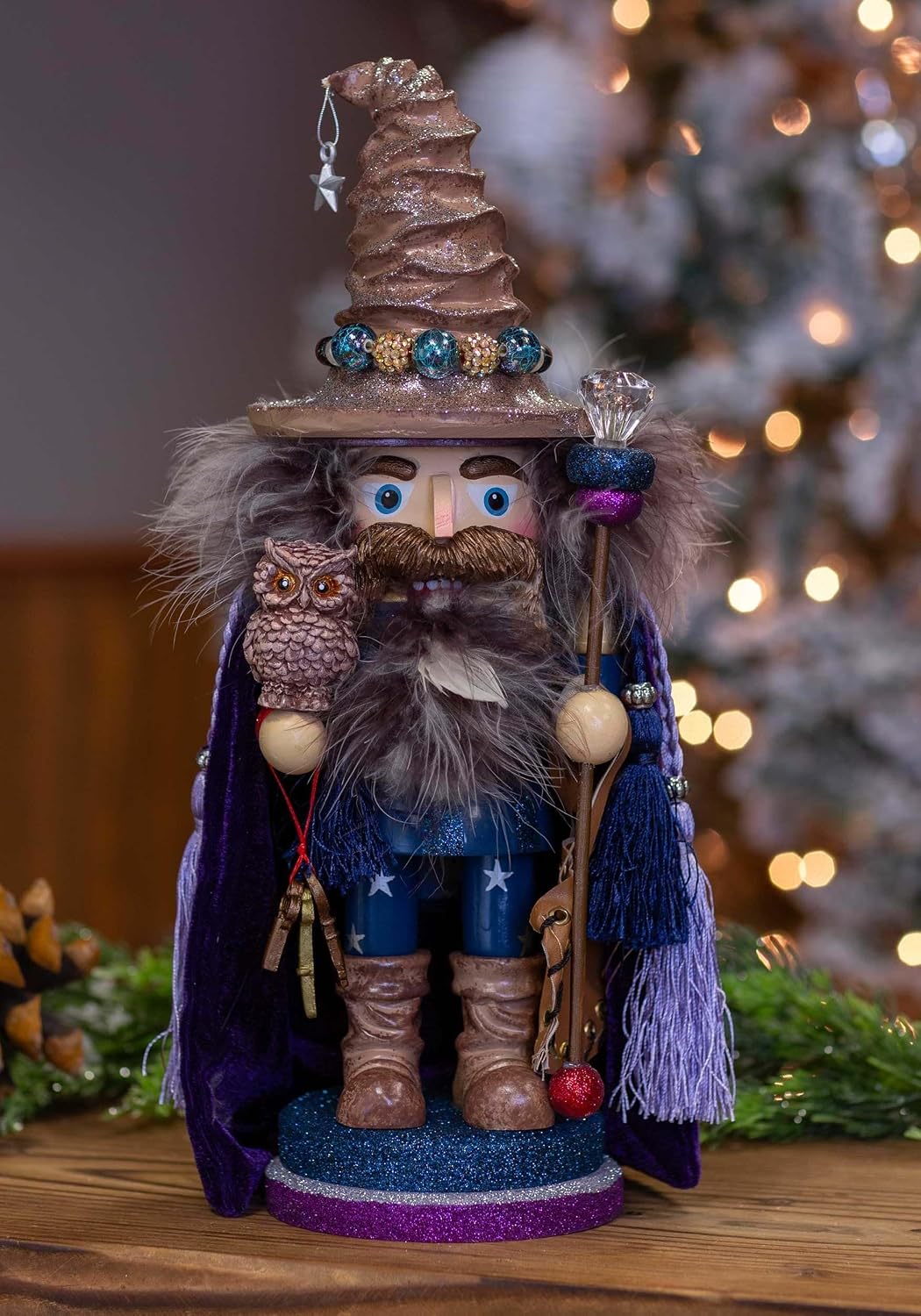
Kurt
$66.40
In stock on Amazon
Check price on AmazonMid-Range Tier: Erzgebirge Workshop Production ($80–$220)
Once you cross $80, the calculus shifts decisively toward Erzgebirge workshop pieces — specifically the standard catalog lines from makers like KWO (Olbernhau) and the broader Christian Ulbricht mid-catalog range. These pieces are still production work rather than individual commissions, but they are made in the Erzgebirge region by craftspeople working in the established regional tradition.
What to verify at this tier: The Erzgebirge Tourism Board’s Volkskunst documentation (erzgebirge-tourismus.de) explains that the “Echt Erzgebirge” seal is administered by the Interessenverband Erzgebirgischer Volkskunst, a regional trade association. Its presence confirms the maker is based in the Erzgebirge and that the work meets defined craft standards. At this price tier, any reputable dealer should be able to show either the seal on the piece itself or documentation confirming the producing atelier.
Where it wins: The 10-to-15-year display life is realistic for a well-maintained piece. The regional craft heritage is present and documentable. This tier is appropriate for recipients who appreciate German tradition, for milestone-adjacent occasions (a meaningful birthday, a housewarming for someone who collects seasonal décor), and for buyers who want something that will still look intentional a decade from now.
Where it falls short: Standard production lines from even respected makers do not carry strong secondary-market appreciation. If the framing is explicitly “heirloom investment,” this tier is a step below what that framing requires.

Seiffener
$149.99
In stock on Amazon
Check price on AmazonPremium Tier: Signed, Numbered, and Atelier-Documented Pieces ($250–$2,000+)
At the top of the market sit signed and numbered limited editions from makers like ULPE (a cooperative of independent Erzgebirge woodcarvers), KWO limited-edition runs, and individual atelier commissions from named craftspeople. DW’s reporting on Erzgebirge craft culture (dw.com) has highlighted that the strongest secondary-market pieces in this category come with a complete documentation chain: maker’s mark on the base, the “Echt Erzgebirge” regional seal, a signed certificate of origin, and edition numbering.
What to verify at this tier: Ask for a photograph of the base before purchasing. Signed and numbered ULPE pieces and KWO limited editions come with paper certificates; if the seller cannot provide these, treat the listing as unverified regardless of the asking price. The Spruce’s guidance on authenticating German Christmas decorations (thespruce.com) reinforces that tool marks, slight asymmetry, and hand-applied finish variation are the physical hallmarks that separate genuine hand-carved work from production facsimiles — and at this price, you should be able to see all three.
Resale and appreciation: Collector community records for signed and numbered Erzgebirge editions in original packaging with complete documentation show consistent long-term interest, particularly for pieces from named ateliers. This is the tier where the gift can reasonably be described as an heirloom investment — but only if the documentation chain is complete. Pieces without maker marks or certificates do not carry the same secondary-market standing regardless of visual quality.
Where it falls short: Significant overkill for recipients who will use the piece as seasonal décor without understanding its provenance. Overspending on a collector-grade piece for someone who will treat it as a mantel filler is as much a mismatch as underspending on a novelty figure for someone who would have cherished something with documented craft heritage.
Seiffener
$154.99
In stock on Amazon
Check price on AmazonThe Decision Rule
If you’ve followed the four questions above, the decision rule is straightforward.
Choose the budget tier (Kurt Adler, $18–$65) when the occasion is novelty or fun, the budget is modest, and the recipient’s connection to German craft heritage is incidental. Match the license to the recipient’s passion — sports, military branch, beloved fictional character — and you’ll land the gift well without pretending it’s something it isn’t.
Choose the mid-range tier ($80–$220) when the recipient appreciates German tradition, the occasion has a 10-year horizon, and you want something that communicates genuine thought without crossing into collector-grade territory. Verify the “Echt Erzgebirge” seal and the base mark before purchasing; skip any listing that cannot show both.
Choose the premium tier ($250 and up) when the occasion is milestone-level, the recipient is a collector or would genuinely understand what they’re holding, and you’re prepared to verify the complete documentation chain. Signed, numbered, atelier-documented pieces are the only defensible choice at this tier — and shortcuts here (buying on visual impression alone, skipping the certificate verification) undermine the entire point of the purchase.
The common mistake is buying at the wrong tier for the occasion: overspending on a collector-grade piece for someone who’ll treat it as seasonal décor, or underspending on a novelty figure for a recipient who would have cherished something with provenance. Match the piece to the person. That’s the whole game.