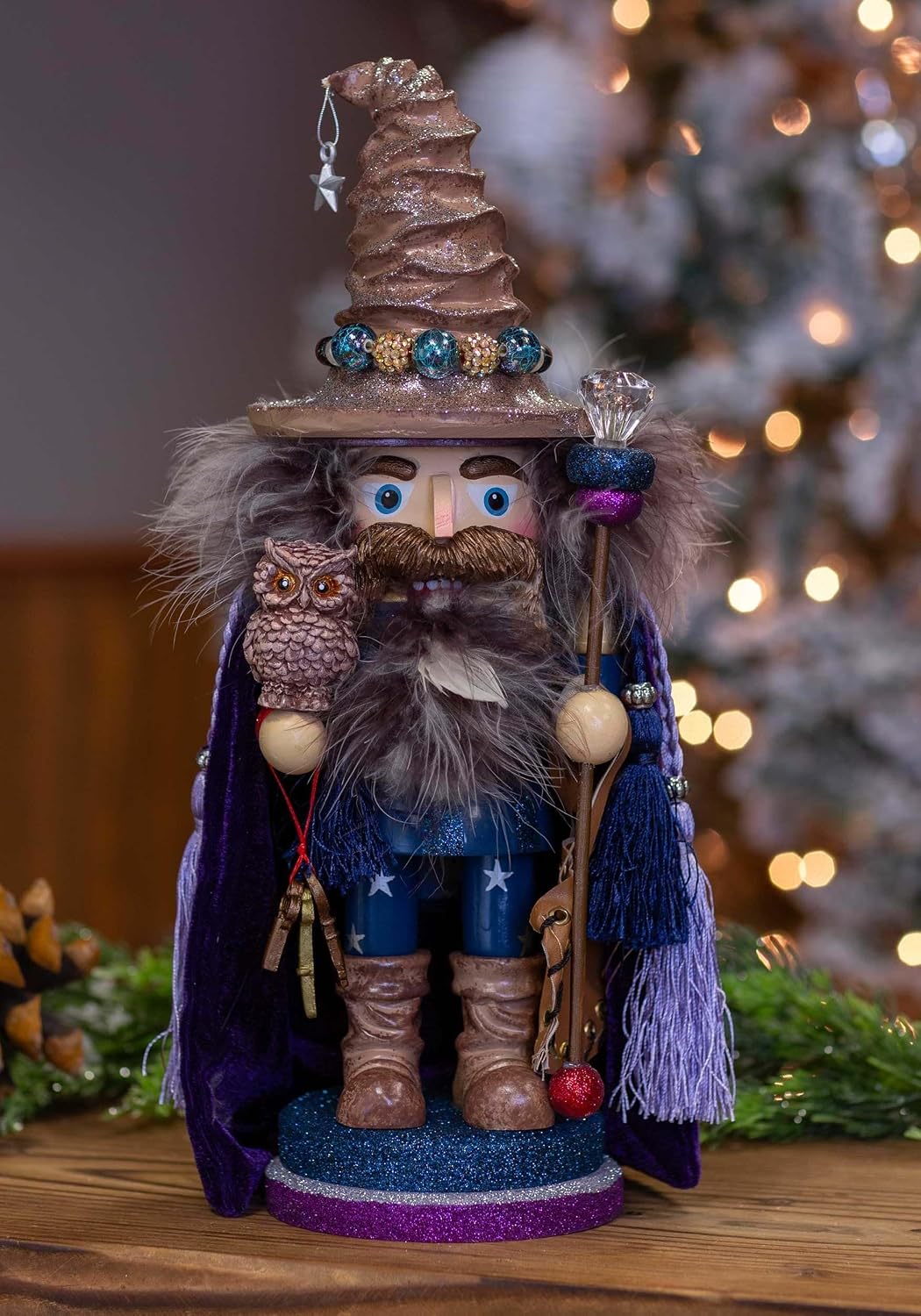
If you’ve ever received a nutcracker as a holiday gift and wondered why some feel like heirlooms while others feel like shelf-fillers, you’re already asking the right questions. A nutcracker, in the collector’s sense, is a hand-painted wooden figure — traditionally a soldier, king, or craftsman — whose mouth opens on a lever mechanism. They originate in the Erzgebirge (AIR-tsuh-guh-BIR-guh), a mountain region straddling eastern Germany and the Czech border, where miners’ families began carving them in the 17th century as a winter income source. Today the tradition spans a wide spectrum: from the Kurt Adler Hollywood line sold at mass-market price points, through the mid-tier Steinbach pieces beloved by themed collectors, up to hand-signed Christian Ulbricht figures that function as genuine folk-art investments. This guide is for collectors who already own at least one and are now trying to build something coherent — a display that grows more interesting each year rather than more cluttered.
| EDITOR'S PICKGerman Christmas Nutcracker San… | Mid-tierGerman Christmas Nutcracker Bla… | Budget pickKurt Adler Hollywood Wizard Nut… | |
|---|---|---|---|
| Height (cm) | 30 | 27 | — |
| Height (in) | 12 | 10.6 | 15 |
| Maker | Christian Ulbricht | Christian Ulbricht | Kurt Adler |
| Erzgebirge origin | ✓ | — | ✗ |
| Theme | Santa Claus | Black Forester | Hollywood Wizard |
| Cuckoo clock | — | ✓ | — |
| Price | $198.50 | $189.00 | $66.40 |
| See on Amazon → | See on Amazon → | See on Amazon → |
Why Annual Gifting Is the Real Engine of Nutcracker Collecting
Most serious nutcracker collections don’t start with a plan. They start with a single gift, followed by a second the next holiday season, and then a habit forms. Across aggregated buyer reviews for the pieces discussed in this guide, the pattern appears repeatedly: one reviewer notes that a wizard nutcracker is the seventh Kurt Adler figure added to their collection; another has purchased a nutcracker for their daughter every year since she was born; a grandparent documents 23 consecutive years of gifting a nutcracker to a grandchild.
That annual rhythm is worth naming explicitly because it changes how you should think about each purchase. You’re not buying a single object. You’re casting a vote for a direction. The question isn’t just “is this a good nutcracker?” but “does this figure open a theme I can sustain, or does it close off options?”
The Smithsonian Magazine’s overview of Erzgebirge craft tradition notes that the region’s workshops have always catered to themed series — miners, foresters, bakers, musicians — because series-based collecting creates repeat customers. That commercial logic aligns perfectly with how modern collectors behave, and it’s baked into the product lines of every major maker in this space.
By the Numbers: Tier Benchmarks as of Early 2026
| Maker | Typical price tier | Production origin | Collector resale trajectory |
|---|---|---|---|
| Kurt Adler Hollywood | $25–$75 | China/overseas finishing | Flat; sentiment-driven |
| Steinbach | $80–$200 | Germany (some finishing overseas) | Moderate; retired pieces appreciate |
| Christian Ulbricht | $150–$600+ | Erzgebirge, Germany | Strong; signed editions trade upward |
Mixing Makers Without Making a Mess: The Practical Rules
The most common anxiety among collectors at your stage is visual coherence. You have a Steinbach Beer Brewer, a Kurt Adler wizard, and you just spotted an Ulbricht Black Forest Clockmaker — do they belong together?
The answer is yes, with structure. Here’s the framework that holds across The Spruce’s guide to nutcracker display and consistent collector practice:
1. Anchor by scale, not maker. Nutcrackers in the 12–15 inch range read as the same “voice” on a shelf regardless of brand. Mixing a 15-inch Steinbach with a 15-inch Kurt Adler Hollywood figure works because eye level equalizes them. Where it fails is when a 10-inch mass-market piece sits next to a 20-inch Ulbricht — the scale difference signals a quality hierarchy you probably don’t want to advertise.
2. Unify by color palette or theme, not era. The Bavarian/Oktoberfest cluster — lederhosen figures, beer brewers, alpine couples — has a warm earthy palette (ochre, forest green, cream) that reads as cohesive even when makers differ. Mix a Steinbach Beer Brewer with a RattanView Bavarian couple and a Kurt Adler alpine soldier and what the viewer registers is “German village,” not “three different factories.”
3. Give each maker its own “voice area.” If you have more than eight figures, consider separating your Ulbricht pieces onto a higher shelf or into a dedicated cabinet. Their hand-carved detail reads differently than a mass-market figure; displaying them adjacently without intentional contrast undersells both.
German Culture’s overview of traditional Christmas decorations notes that Erzgebirge craftspeople historically displayed their work in Schaukästen (display cases with interior lighting) specifically to separate fine woodcarving from everyday decoration — a principle that maps cleanly onto modern shelving decisions.
Understanding What You’re Actually Buying: Quality Signals by Maker
At the intermediate stage, you’ve already noticed that not all nutcrackers are equal. What you may not have systematized yet is why — and that matters when you’re choosing the next addition.
Kurt Adler Hollywood: High Upside, Real Variance
The Kurt Adler Hollywood line is where many collectors begin, and it rewards careful selection within the line. Reviewers consistently describe specific figures — the wizard, the vintage Santa profiles — as having detail that “exceeds expectations” at the price point, with paint application that photographs well and holds up on display. That’s genuine praise.
But the same buyer community includes at least one documented case of a different Kurt Adler figure being returned for looking “cheap” before the buyer purchased the wizard and kept it. That’s not an anomaly — it reflects real within-line quality variation. The Hollywood designation applies to a wide range of figures with different sculptors and production runs. The rule here: buy on the specific figure’s reviews, not the brand’s reputation as a whole. Look for reviewer comments about paint quality, face detail, and whether the piece arrived with tight joints. Vague praise isn’t enough at this tier.
Christian Ulbricht: Where Craft Becomes Documentation
Christian Ulbricht figures are produced in Seiffen, in the heart of the Erzgebirge, and they carry the weight of that provenance. Atlas Obscura’s profile of Seiffen describes it as a village where nearly every family has at least one member employed in the wood-turning trades — the Drechslerhandwerk (woodturning craft) that gives Erzgebirge figures their characteristic lathe-rounded forms.
What collectors at your stage need to know: an Ulbricht piece is priced significantly above a Kurt Adler not primarily because it’s larger or more decorated, but because it’s hand-finished by named craftspeople in a certified workshop. The VdS (Verband der Schwarzwälder Uhrmacher und Spielzeughersteller) label and equivalent Erzgebirge craft designations are the authentication markers that support secondary-market value. If you’re buying Ulbricht as a long-term investment rather than just a display piece, confirm the piece carries its authenticity documentation.
One specific note the review data surfaces: the Ulbricht Black Forest Clockmaker nutcracker attracted buyer attention because the miniature clock inside the figure is battery-operated rather than key-wound. At least one buyer had assumed from product descriptions that it was mechanically wound. This is worth flagging as a description accuracy gap — not a quality defect, because the battery clock is actually a pleasant functional touch, but worth knowing in advance so your expectations match reality.
Steinbach: The Beloved Middle Tier with One Calibration Note
Steinbach occupies the space between mass-market and fine art, and it’s where themed collecting — occupational figures, fairy-tale characters, historical series — is most developed. Retired Steinbach editions from the 1990s have demonstrated modest secondary-market appreciation, particularly themed series where multiple pieces were released over several years.
The calibration note: a Steinbach Beer Brewer arrived for at least one documented buyer with an accessory (a small barrel or tankard, per the figure’s theme) unattached. The buyer’s comment — “for the price it should be perfect out of the box” — is a fair expectation-setter. Steinbach pieces in the $100–$200 range should arrive shelf-ready. If yours doesn’t, small accessories on Steinbach figures are typically reattachable with a dab of wood-safe adhesive. It’s a minor fix, but it’s worth inspecting your piece on arrival rather than discovering it mid-display season.
Extending Beyond Christmas: Bavarian Figures and Year-Round Display
One genuinely underused angle in nutcracker collecting is non-Christmas display. The RattanView Bavarian couple — a figure set in traditional Bavarian dress — has generated buyer comments specifically mentioning Valentine’s Day placement and general year-round shelf presence. That’s not a stretch. A Bavarian couple in dirndl and lederhosen reads as folk art any month of the year; it doesn’t carry the red-and-green signaling of a Santa or a Christmas soldier.
DW’s coverage of Bavarian cultural traditions notes that decorative wooden figures in regional dress have been displayed year-round in Bavarian homes for generations — they’re expressions of regional identity, not seasonal ornament. If you’re building a collection that your household lives with rather than packs away, prioritize figures with occupational or regional themes over overtly Christmas-coded ones.
Frequently Asked Questions
How do I mix nutcrackers from different makers without the collection looking mismatched? Anchor by scale (keep heights consistent within display zones), unify by color palette or theme, and give premium pieces their own display space. The eye reads “German village” before it reads “different manufacturers.”
What is the difference in quality between Kurt Adler Hollywood and Christian Ulbricht nutcrackers? Kurt Adler Hollywood figures are produced at lower price points with overseas finishing and vary in quality within the line — buy on the specific figure’s reviews rather than brand reputation alone. Christian Ulbricht pieces are hand-finished in the Erzgebirge, carry craft designations that authenticate regional origin, and hold secondary-market value that Kurt Adler pieces generally don’t. The gap is real and worth the premium if you’re treating your collection as a long-term investment.
Are these nutcrackers functional — can they actually crack nuts? Technically, yes — the lever mechanism is the original function. Practically, collector-grade nutcrackers are display pieces and the mechanism is fragile enough that using it regularly risks damaging the figure. Treat them as decorative. If you want functional, buy a separate kitchen nutcracker.
What should I do if a piece arrives with a loose or unglued accessory? Inspect on arrival. Small accessories on Steinbach and similar figures can detach in shipping. Wood-safe craft adhesive (clear-drying) reattaches most accessories cleanly without visible residue. If the damage is structural — a cracked body, a broken lever — contact the retailer immediately; this crosses from shipping variance into a warranty issue.
How do I choose the next nutcracker to add to an existing themed collection? Apply the if/then rule: If your collection has a dominant theme (Bavarian/Oktoberfest, woodland, occupational), add within that theme and vary by maker or scale. If your collection is mixed, your next purchase should establish a second anchor theme rather than adding a third orphan figure. Two distinct clusters read as intentional; three isolated figures read as accumulation. The moment you can label two subsets — “my Bavarian group” and “my fairy-tale group” — your collection has structure.
The Decision Rule for Your Next Purchase
If you’re at seven figures or fewer and still building your core display, prioritize theme clarity over maker prestige. A well-chosen Steinbach that completes an Oktoberfest trio is more valuable to your display than a beautiful Ulbricht that stands alone.
If you’re at eight or more figures and the collection feels visually noisy, your next move isn’t a new figure — it’s a display decision. Elevate your two or three finest pieces (Ulbricht or signed Steinbach editions) to a dedicated shelf or cabinet. That editorial act will make everything you already own look more intentional.
And if someone is giving you a nutcracker as an annual gift, do them the favor of naming a theme. The grandparent who bought 23 consecutive nutcrackers succeeded because the tradition had a direction. That’s the whole model.