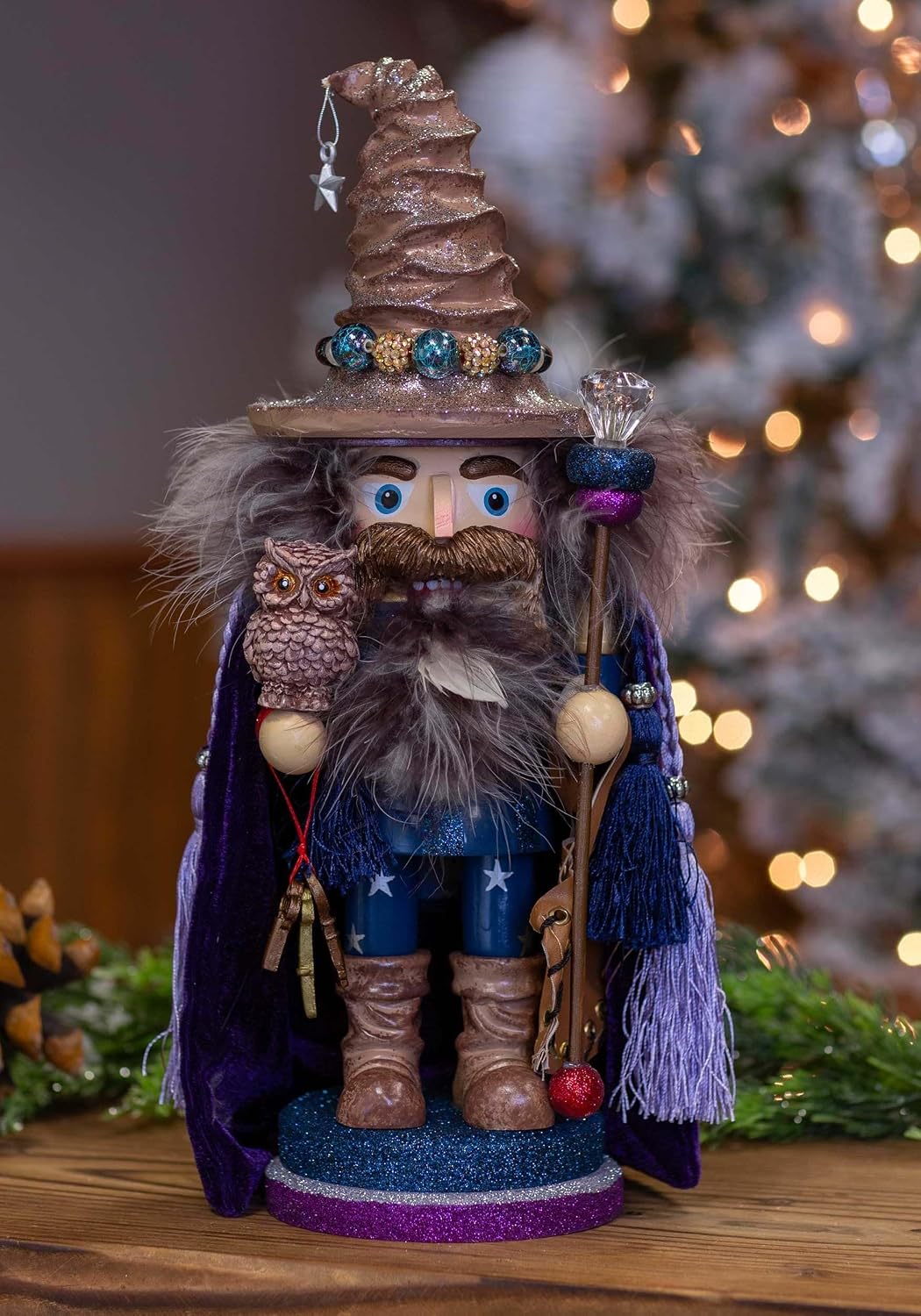
A nutcracker, at its most basic, is a carved wooden figure — traditionally a soldier, king, or character — with a lever mechanism in the back that (in older functional versions) could crack a nut between the jaws. Today the vast majority sold as collectibles are purely decorative, and the three brands this guide covers — Kurt Adler, Christian Ulbricht, and Seiffener Volkskunst — represent three very different points on the spectrum from mass-market novelty to hand-finished Erzgebirge folk art. The Erzgebirge (roughly “Ore Mountains”) is a forested region straddling the German-Czech border that has produced carved wooden figures for centuries. If you’re building a collection and wondering whether pieces from these three makers can share a shelf without looking like they came from three different stores — the short answer is yes, but the method matters. This guide will show you exactly how to make it work.
| EDITOR'S PICKGerman Christmas Nutcracker San… | Mid-tierSeiffener Volkskunst German nut… | Budget pickKurt Adler Hollywood Wizard Nut… | |
|---|---|---|---|
| Height | 12 in / 30 cm | 15 in / 37 cm | 15 in |
| Region | Erzgebirge | Erzgebirge | — |
| Figure | Santa Claus | Soldier | Wizard |
| Maker mark | Christian Ulbricht | SV 11205/2 | — |
| Color | — | Blue | — |
| Owl included | — | — | ✓ |
| Price | $198.50 | $154.99 | $66.40 |
| See on Amazon → | See on Amazon → | See on Amazon → |
What Each Brand Is Actually Selling You
Before you start mixing, you need to know what you’re mixing. These three brands have overlapping aesthetics but very different manufacturing philosophies, and that gap shows up in the details.
Kurt Adler is a New York-based importer and design house that has been producing holiday collectibles since 1946. Their Hollywood line — the one that generates the most collector loyalty in aggregated reviews — leans into theatrical character designs: wizards, zoo animals, elaborate fantasy figures. Owners who’ve reviewed the Hollywood series consistently describe pieces as “even better than the picture” and highlight the quality of the paint finish relative to price. Notably, reviewers in this line are often deep repeaters: one documented buyer identified their recent purchase as their seventh Kurt Adler Hollywood nutcracker. The brand’s strength is creative range and accessible price entry. The tradeoff is that Kurt Adler does not position itself as a German craft producer — these are American-designed collectibles, often manufactured in Asia, with a holiday novelty identity rather than a heritage identity.
Christian Ulbricht is a different story entirely. The Ulbricht family operation is rooted directly in Seiffen, the Erzgebirge village that Atlas Obscura has called “the village that Christmas built,” and the brand carries genuine craft lineage. DW’s feature on Erzgebirge woodcraft notes that families like the Ulbrichts represent a multi-generation tradition of lathe-turned and hand-carved figures that dates back to the 17th century. Ulbricht buyers in aggregated reviews purchase specifically for that heritage signal — and they accept minor imperfections as part of the deal. One reviewed Ulbricht nutcracker (a musician figure) arrived with a loose instrument that required re-gluing; multiple buyers across the brand appear to treat this as a known and acceptable quirk of hand-assembled craft work rather than a defect. That framing tells you something important about who buys Ulbricht and why.
Seiffener Volkskunst is the third type entirely: a cooperative workshop based in Seiffen that operates under formal regional craft certification. The Erzgebirge Tourism Board’s regional craft overview identifies Seiffener Volkskunst as one of the organizations maintaining the Erzgebirge’s designation as a traditional craft production region. Buyers in aggregated reviews specifically note painted-surface quality — “no imperfections at all” is a phrase that recurs — and many describe a gifting tradition spanning two decades or more. These are pieces purchased as heirloom investments, not seasonal decorations.
The Mismatch Problem (and Why It’s Mostly Solvable)
The reason collectors worry about mixing these brands is visual register. Kurt Adler Hollywood pieces tend to be expressive, saturated in color, and character-driven — a wizard nutcracker with dramatic robes reads as theatrical. Ulbricht pieces are more restrained, with muted earth tones and the slight surface variation that comes from hand-finishing. Seiffener Volkskunst pieces sit in a similar register to Ulbricht — traditional palette, careful paint application, evident craft intentionality — but with a cooperative workshop consistency that Ulbricht’s family-scale production doesn’t always match.
The Spruce’s guide on displaying collectibles without visual clutter makes a point that applies directly here: the eye reads groupings by height, color temperature, and repetition of silhouette before it reads brand or origin. That insight is the unlock for mixed-brand collections.
Here’s the practical framework:
Group by character type, not brand. A shelf of soldier/guard figures — one Kurt Adler Hollywood guard, one Ulbricht soldier, one Seiffener Volkskunst traditional Nussknacker — reads as a coherent thematic collection even if the paint registers differ. The silhouette similarity overrides the brand difference.
Use height as your hierarchy tool. A mantelpiece display typically reads best with a clear height anchor at center or one end (12–15 inches), stepping down to mid-range pieces (8–10 inches), and smaller accent figures at the ends (5–7 inches). Mixing brands across this height range is far less disruptive than mixing them at the same height, where differences in finish quality become visible side-by-side.
Separate the theatrical from the traditional with physical spacing or a divider object. A Kurt Adler wizard or zoo menagerie figure can absolutely share a shelf with Ulbricht pieces, but place a neutral object — a small wooden star, an unlit candle, a pine cone — between the registers. That visual pause tells the eye “these are two related but distinct sections,” which prevents the shelf from looking accidental.
By the Numbers: Brand Comparison at a Glance
| Brand | Origin | Finish Type | Collector Register | Known Quirk |
|---|---|---|---|---|
| Kurt Adler Hollywood | American-designed, Asian-manufactured | Machine-consistent, vibrant | Novelty/character collector | Deep repeat-buyer loyalty |
| Christian Ulbricht | Seiffen, Erzgebirge | Hand-assembled, family workshop | Heritage/authenticity buyer | Occasional loose hand-applied parts |
| Seiffener Volkskunst | Seiffen cooperative, Erzgebirge | Hand-painted, cooperative QC | Heirloom/gifting tradition | Premium price point for entry |
Making the Investment Decision: Which to Anchor Your Collection Around
If you’re six to twenty-four months into collecting and you have a decision pending — whether to anchor a new display around one brand or build across all three — here’s the tradeoff structure as we’ve been able to reconstruct it from published sources and aggregated owner feedback.
Anchor with Seiffener Volkskunst if: your primary goal is long-term value retention and you’re treating pieces as heirloom investments. The cooperative’s regional craft certification, documented by the Erzgebirge Tourism Board, is the clearest authenticity signal in this category. Seiffener Volkskunst pieces are the ones buyers return to after 23 years of gifting; that pattern matters.
Anchor with Christian Ulbricht if: heritage craft lineage is your primary signal but you want more character range and price-point flexibility than Seiffener Volkskunst offers at entry. The Ulbricht family’s documented Seiffen roots, noted in DW’s Erzgebirge coverage, satisfy the authenticity requirement for serious collectors. Accept the occasional re-gluing situation as a craft characteristic, not a defect.
Use Kurt Adler Hollywood as expansion inventory, not anchor inventory. The Hollywood series genuinely excels at what it does — the Wizard and Zoo Menagerie figures generate some of the strongest collector superlatives in the category, and the repeat-buyer rate signals real product satisfaction. But these pieces don’t carry the regional craft designation that drives secondary market value for Erzgebirge pieces. Buy them for what they are: beautifully made character collectibles with strong display presence. The math here is straightforward — a Kurt Adler Hollywood piece at its price point outperforms on visual impact per dollar; a Seiffener Volkskunst piece at its (higher) price point outperforms on provenance and long-term collector value.
The Smithsonian Magazine piece on the nutcracker’s cultural history makes a useful point: the nutcracker as a decorative object has always been layered — functional tool, folk art form, theatrical prop, and collectible simultaneously. A shelf that includes all three brands isn’t a mismatch. It’s an honest representation of that layered history.
Frequently Asked Questions
Can I mix Kurt Adler and Christian Ulbricht nutcrackers on the same shelf? Yes, and it works better than most collectors expect. The key is grouping by character type or using height hierarchy to create visual order. Where the mix breaks down is when you place high-saturation Kurt Adler Hollywood character pieces directly next to muted Ulbricht traditional figures at identical heights — the finish-register contrast is jarring. Separate them with a neutral object or a deliberate height step, and the shelf reads as curated rather than random.
What height nutcrackers work best for a mantelpiece display? For a standard mantelpiece, a center or anchor piece in the 12–15 inch range gives the display a focal point. Step down to 8–10 inch pieces as your mid-range, and use 5–7 inch figures as end accents. This creates a visual rhythm that works regardless of brand. If your mantelpiece has a low clearance, anchor at 10–12 inches and scale accordingly.
Are Christian Ulbricht nutcrackers actually made in Germany? Yes — the Ulbricht family operation is based in Seiffen in the Erzgebirge region of Saxony, Germany. DW’s feature on Erzgebirge craft production and the Erzgebirge Tourism Board’s regional overview both document Seiffen as an active center of woodcraft production, with family workshops like Ulbricht maintaining production on-site. This is one of the key distinctions between Ulbricht and brands that use German heritage aesthetics but manufacture elsewhere.
Why do some Ulbricht nutcrackers arrive with loose or unglued parts? This is a documented pattern across aggregated owner reviews — specifically on figures with small hand-applied accessories like instruments or props. It reflects the hand-assembly nature of workshop production: small components are applied by hand with craft adhesive, and transit vibration occasionally loosens them. Collectors who purchase Ulbricht for heritage authenticity consistently describe this as a minor and acceptable characteristic rather than a defect, and re-gluing is straightforward. If perfect out-of-box finish consistency is your priority, Seiffener Volkskunst’s cooperative quality control is a better fit.
What is a good first Erzgebirge nutcracker for someone new to collecting? We’d point a new collector toward either a mid-range Christian Ulbricht figure or an entry-level Seiffener Volkskunst piece, depending on budget. Both carry legitimate Erzgebirge provenance and introduce the collector to the traditional aesthetic — the muted earth tones, the hand-painted surface variation — that distinguishes genuine regional craft from reproductions. Starting with a traditional character type (soldier, king, or forester) gives you maximum flexibility to build around it later.
How do I display nutcrackers of different sizes cohesively? The Spruce’s home decor guidance on collectible display emphasizes that the eye reads groupings in terms of visual rhythm — height variation, repeated color across pieces, and consistent spacing. For mixed-size nutcracker collections: use graduated height intentionally (not accidentally), keep spacing between pieces consistent within each grouping, and anchor with two or three pieces in your dominant color temperature. If you’re mixing warm-toned traditional Erzgebirge pieces with more saturated Kurt Adler character figures, a small neutral element between groupings — an unlit taper candle, a carved wooden star — acts as a visual pause that makes the mix look deliberate.