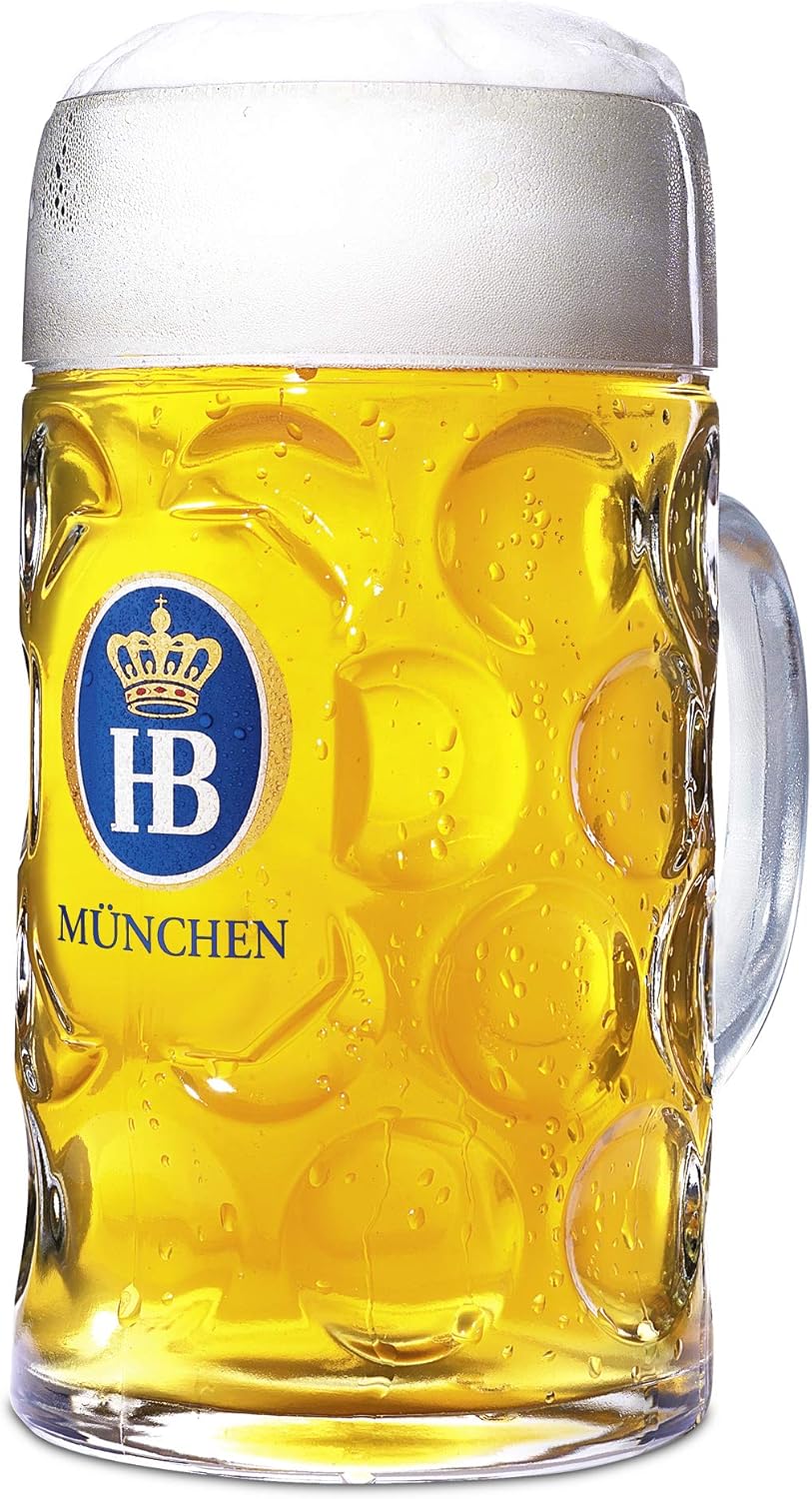
Oktoberfest runs for roughly two weeks each autumn in Munich — but if you’ve been shopping for German gifts longer than one season, you already know the festival’s cultural footprint extends well past late October and far beyond Bavaria’s borders. For the uninitiated: Oktoberfest gifts are items rooted in Bavarian and broader German folk tradition — beer steins (lidded ceramic or pewter drinking mugs), nutcrackers (the lever-jaw wooden figures made famous in the Erzgebirge mountains of Saxony), painted ornaments, and heritage decorative pieces. The trouble is that the gift market runs from $15 novelty mugs to $1,500 hand-carved collector pieces, and without a map, it’s easy to spend mid-range money on a low-range item. This guide is that map. We’ve researched the production landscape, tracked secondary market signals, and parsed the authenticity markers that separate a genuine craft investment from a well-packaged import. Here’s where the real decisions are.
| EDITOR'S PICKISDD Cuckoo Clocks German Nutcr… | Mid-tierHomeWetBar Personalized German… | Budget pick1844 Helko Werk Germany Beer St… | |
|---|---|---|---|
| Origin | Erzgebirge, Germany | — | Germany |
| Height | 27 cm / 11 in | — | — |
| Capacity | — | — | 17 oz / 0.5 L |
| Lid | — | ✓ | — |
| Personalized | — | ✓ | — |
| Material | — | — | Stoneware |
| Price | $135.15 | $39.95 | $30.00 |
| See on Amazon → | See on Amazon → | See on Amazon → |
The Stein Tier Map: Where Your Money Actually Goes
The Spruce’s overview on identifying authentic German steins draws a clean line that most buyers discover too late: country of manufacture is the single fastest filter, but it’s not the only one that matters.
Here’s how the market breaks down in 2026:
| Price Band | What You’re Typically Getting | Key Signal |
|---|---|---|
| $18–$45 | Molded stoneware or ceramic, often finished in Asia; licensed Oktoberfest imagery | No maker’s mark; “Germany” may refer only to design origin |
| $60–$150 | German-kiln stoneware (Gerz, Rastal, or comparable); relief decoration; pewter lid | ”Made in Germany” stamp on base; pewter hallmark on lid |
| $175–$400 | Marzi & Remy, King Werk, or Thewalt production; hand-painted limited editions; signed | Numbered edition; artisan signature; certificate of authenticity |
| $500+ | One-of-a-kind or short-run signed steins; secondary market Hummel-era pieces | Auction provenance; VdS or comparable regional certification |
The intermediate buyer’s trap is the $60–$150 band. These are legitimately German-made pieces, often well-crafted — but “German stoneware” covers an enormous range of quality, and the pewter lid is frequently the weakest link. Per DW’s cultural heritage reporting, German craft producers have faced sustained pressure from volume importers since the 1990s, and several formerly mid-range stein producers have quietly moved finishing operations overseas while retaining German design attribution. The practical check: flip the stein. If the base says “Made in Germany” and the lid’s inner surface carries a pewter purity stamp (typically “97%” or a maker’s guild mark), you’re holding a legitimate piece. If neither marking is present, you’re in reproduced-design territory regardless of what the packaging claims.
For the gift-buyer sourcing steins at volume — corporate Oktoberfest events, hospitality venue sets — Rastal remains the most consistently traceable brand at the $40–$90 per-unit range. Their production is German-certified and their licensing relationships with Bavarian festivals are documented. That traceability matters when a client asks questions.
Nutcrackers: Erzgebirge vs. Everything Else
This is where the category gets genuinely complicated, and where the research payoff is highest.
The Erzgebirge (roughly: “Ore Mountains”) region of Saxony has produced wooden nutcrackers for roughly 300 years. In 2019, UNESCO inscribed Erzgebirge folk craft traditions on its Intangible Cultural Heritage list — a designation documented in detail by Erzgebirge Tourismus e.V. That inscription matters commercially: it gives serious collectors a defensible anchor for the “heirloom investment” thesis, and it distinguishes regional production from the far larger category of German-aesthetic nutcrackers produced elsewhere.
The collector-relevant brands in 2026:
- KWO (Kunstgewerbe-Werkstätten Olbernhau): One of the oldest continuously operating Erzgebirge workshops. Their standard production nutcrackers run $80–$180; signed or limited editions reach $400+. KWO pieces carry a branded base stamp and typically come with a regional origin card. Smithsonian Magazine’s feature on German Christmas market traditions specifically calls out KWO as emblematic of the region’s surviving workshop model.
- Steinbach: The most recognizable name in the U.S. market — and the most important to parse carefully. Steinbach’s collector-series pieces (signed, numbered, themed editions) remain popular on the secondary market, with strong prices at German-Americana auctions. However, as we’ve tracked extensively: Steinbach’s production has shifted significantly, with finishing now occurring outside Germany for a portion of their line. The practical implication: pre-2010 Steinbach signed editions hold value more reliably than current production at equivalent price points. If you’re buying new Steinbach as a collector investment, buy the clearly-designated German-workshop pieces and verify the origin documentation explicitly.
- ULPE (Ulpe Holzkunst): A smaller workshop producing short-run signed editions favored by serious collectors. Distribution is narrower, prices start around $300, and secondary market data shows consistent appreciation on signed pieces. Lower name recognition in the casual gift market actually works in the collector’s favor here — demand is concentrated among informed buyers.
The if X, then Y for nutcrackers:
- If the recipient collects and tracks secondary market values → KWO signed editions or ULPE; prioritize regional documentation over brand recognition.
- If the recipient is a decorator or hospitality buyer wanting visual impact at scale → Steinbach’s current mid-range production is defensible; verify origin, don’t present it as an investment piece.
- If the budget is $40–$80 and the goal is a genuine German gift without collector pretension → look for unmarked Erzgebirge workshop production sold through regional importers; these are honest craft pieces without the signed-edition premium.
Heritage Pieces: When the Gift Is the Provenance Story
For the $400–$2,000+ buyer — whether that’s a serious collector, an interior designer sourcing a statement piece, or a corporate client marking a milestone — the purchase decision pivots almost entirely on documentation and maker verifiability.
Three categories dominate at this level:
Cuckoo Clocks. The Black Forest is the canonical production region. Schwarzwald Tourismus GmbH maintains documentation on the VdS Schwarzwald (Verein die Schwarzwälduhr) certification — a label that guarantees a clock was manufactured within the Black Forest region using defined traditional methods. This label is the single most important authenticity signal in the category. Without it, a “Black Forest cuckoo clock” is a style descriptor, not a provenance claim.
At the collector tier, Rombach & Haas and Hekas are the benchmark producers. Rombach & Haas hand-carved pieces regularly appear at the $800–$2,000 range; the carving quality and movement reliability (typically 8-day mechanical movements, as opposed to 1-day movements standard in mid-range pieces) justify the premium for buyers who will keep a piece for decades. Per aggregated owner reports across specialty forums and retailer review archives, the 8-day movement’s longer wind interval is consistently cited as the practical differentiator for display pieces in hospitality or residential settings where daily winding is impractical.
Anton Schneider occupies the productive middle — genuinely Black Forest-produced, VdS-eligible, at $200–$600 — making it the correct recommendation when a client wants verified provenance without the top-tier price. The tradeoff is shorter limited-run availability; popular Schneider models sell out seasonally and don’t reliably return.
Music Boxes. Matthias Wissner produces movement-based music boxes in the Black Forest tradition; serious pieces run $300–$900. The differentiator from import music boxes is the movement itself — Swiss-standard pin-cylinder or disc mechanisms versus spring-driven Asian movements. The Spruce’s home décor coverage notes that collector-grade music boxes are increasingly purchased as functional art objects rather than novelty items, a framing that aligns with the heirloom-investment positioning.
Figurines and Woodcarvings. Wendt & Kühn angel figurines are the dominant name in the Erzgebirge decorative figurine category — instantly recognizable by the distinctive dotted-wing motif, produced in Grünhainichen, Saxony. Entry pieces start around $60–$120; signed artist editions reach $500+. DW’s cultural heritage reporting has documented Wendt & Kühn’s deliberate resistance to volume production, which keeps secondary market prices stable. For corporate gift buyers: Wendt & Kühn sets present extremely well and carry the UNESCO cultural heritage backstory that elevates the gift narrative in hospitality contexts.
Buying Decisions by Scenario
By the numbers (2026 market context):
- VdS-certified Black Forest clocks: approximately 150 active certified producers, down from 300+ in 2000 (Schwarzwald Tourismus GmbH documentation)
- Erzgebirge UNESCO listing year: 2019
- Steinbach signed-edition secondary market: pre-2010 pieces averaging 15–30% above original retail at German-Americana auction houses (per auction house published results, 2023–2025)
- Wendt & Kühn production location: Grünhainichen, Saxony — same facility since 1929
The clearest decision rules we’ve found after researching this market extensively:
If the recipient will display the piece publicly (home entryway, hospitality venue, office): prioritize visual drama and verifiable origin. A VdS-labeled cuckoo clock or a Wendt & Kühn set tells its own story to anyone who asks. Budget $300–$800 and don’t compromise on the certification documentation.
If the recipient actively collects and tracks values: skip brand recognition and chase documentation. A signed ULPE nutcracker with regional origin papers outperforms a better-known brand without paperwork, both as an object and as a long-term hold.
If you’re sourcing at volume for a corporate or event context: Rastal steins for functional use, Wendt & Kühn figurine sets for décor, Anton Schneider clocks for statement pieces. All three have traceable provenance, consistent availability through established importers, and a story that holds up to client scrutiny.
If the budget is genuinely $18–$60 and the occasion is festive rather than collectible: buy honestly in that tier. A well-made German stoneware stein with a proper maker’s mark is a good gift. Don’t dress it up as something it isn’t — the recipient will appreciate the honesty, and you’ll avoid the awkward moment when they look up the piece later.
The novelty shelf exists for a reason. But once you know what separates a $45 mug from a $450 heirloom, it’s very hard to unknow it — and very easy to give gifts that actually hold their meaning long past the festival season.