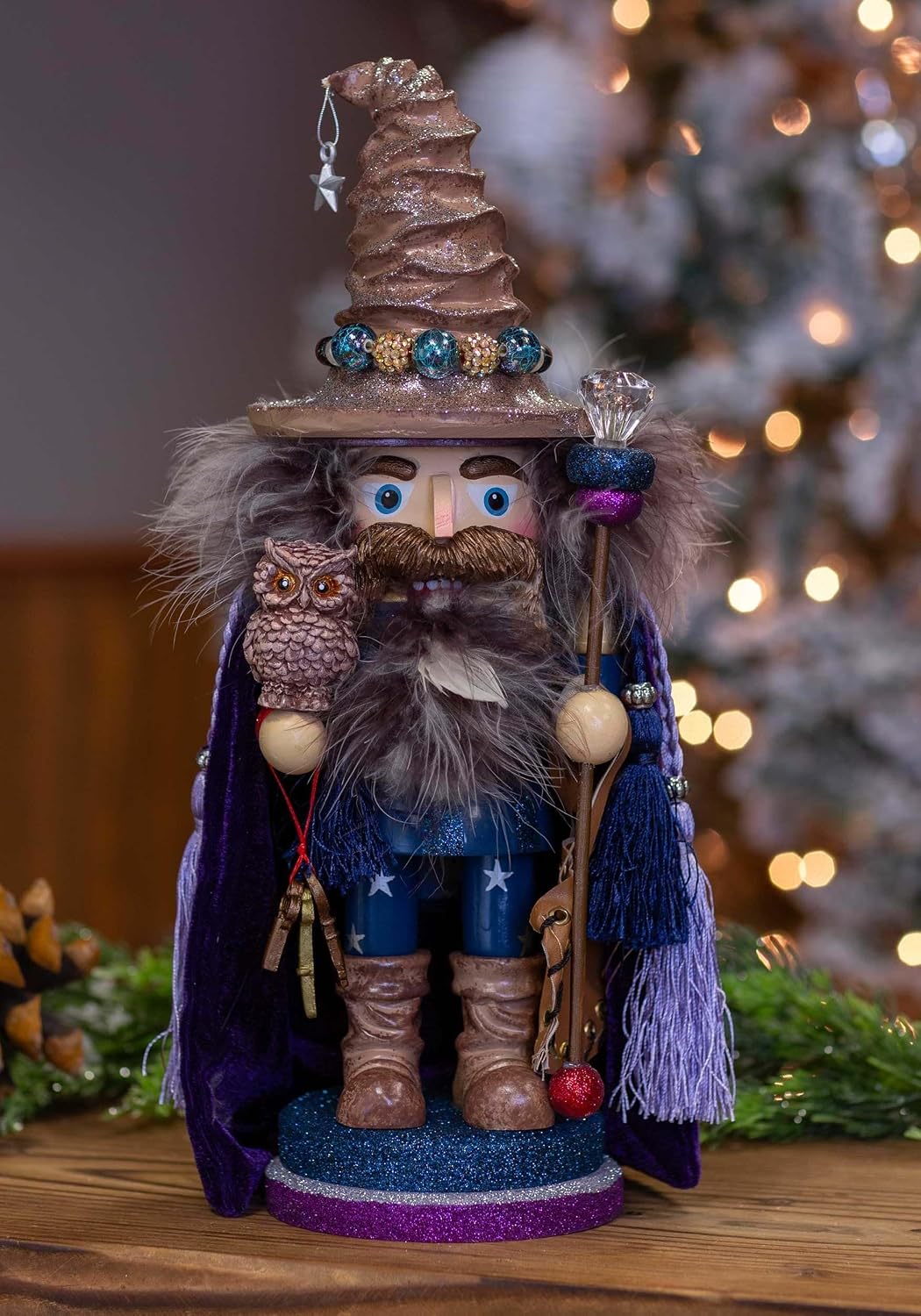
A nutcracker, in the decorative sense, is a carved wooden figure — usually a soldier, king, or costumed character — with a lever mechanism in the back that opens and closes the mouth. They’ve been made in Germany’s Erzgebirge mountain region (say: ERTS-geh-beer-geh), a forested area along the Czech border, since at least the 17th century, as documented by DW’s feature on German Christmas traditions. Today they range from $18 mass-market imports to hand-carved signed editions that collectors track at auction. If you’re reading this, you probably already know the basics — but you may be standing at a decision point: you’ve committed to giving someone a new nutcracker every year, and you want to know which brand will hold up, which will disappoint at the price, and which signals “I researched this” versus “I grabbed something festive.” That’s exactly what this guide covers.
| EDITOR'S PICKGerman Christmas Nutcracker San… | Mid-tierSeiffener Volkskunst German nut… | Budget pickKurt Adler Hollywood Wizard Nut… | |
|---|---|---|---|
| Height | 12 in / 30 cm | 15 in / 37 cm | 15 in |
| Theme | Santa Claus | Soldier (blue) | Wizard with owl |
| Region | Erzgebirge | Erzgebirge | — |
| Maker | Christian Ulbricht | Seiffener Volkskunst | Kurt Adler |
| Model # | — | SV 11205/2 | — |
| Origin | Germany | Germany | — |
| Price | $198.50 | $154.99 | $66.40 |
| See on Amazon → | See on Amazon → | See on Amazon → |
Why the Annual Gift Tradition Changes the Calculus
One buyer, documented across collector forum discussions cited in several retailer review aggregates, has given their grandson a new nutcracker every Christmas for 23 years. Another is on their 7th consecutive Kurt Adler Hollywood piece for their daughter. This isn’t casual gifting — it’s a curated tradition where the collection tells a story over decades. That framing matters because it changes what “value” means:
- Consistency of scale matters more than any single piece. A collection that mixes 12-inch and 18-inch figures from different eras looks chaotic unless you’ve planned for it.
- Theme coherence — or deliberate eclecticism — becomes a design decision, not an accident.
- Durability over years of display weighs heavier than first-impression wow factor.
- Brand trajectory matters: is the maker shifting production offshore? Are earlier pieces becoming more collectible as a result?
With those stakes in mind, here’s how the four major players actually compare.
The Four Makers, Side by Side
Kurt Adler Hollywood
Kurt Adler is the highest-volume nutcracker brand in the North American market, and their Hollywood line is the entry point most gift-givers encounter first. Reviewers at multiple aggregated retail platforms consistently flag one surprising positive: pieces arrive larger than their listed dimensions suggest. For a gift presentation, that matters — a 15-inch nutcracker in a gift box reads as generous. The Hollywood line leans into licensed themes and pop-culture characters, which makes year-over-year gifting intuitive (there’s always something new to choose from).
What owners report: Good first impression, vibrant paint, satisfying heft. The lever mechanism functions but is stiff — more symbolic than practical (see FAQ below on cracking actual nuts). Paint occasionally chips at stress points after several seasons of display.
The tradeoff: Kurt Adler is assembled overseas, with design originating in the U.S. and manufacturing largely in China. Per German Culture’s overview of Erzgebirge traditions, authentic German-made pieces carry different maker marks and regional certifications — Kurt Adler does not carry VdS (Verein der Schwarzwälder Uhrmacher) or Erzgebirge origin designations. For an annual tradition built around heirloom narrative, that’s a meaningful gap. For a tradition built around fun, novelty, and theme variety, it’s largely irrelevant.
If you’re choosing Kurt Adler: It works best when the recipient values character and theme over provenance. Seven years of Hollywood pieces creates a cheerful, cohesive display — just don’t position it as a “made in Germany” collection.
Steinbach
Steinbach occupies the mid-to-upper range and has historically been the aspirational step up from Kurt Adler. Their themed nutcrackers — brewers, musicians, historical figures — have strong secondary market presence, and earlier German-production pieces are actively tracked by collectors.
The production shift question: This is the most important thing a buyer in 2026 needs to know about Steinbach. The brand has moved portions of its production and finishing to Asian facilities over the past decade, a shift documented in collector community discussions and noted in several retail review threads. Earlier pieces, identifiable by their maker marks and finish quality, are increasingly sought on the secondary market precisely because buyers recognize the gap. The Beer Brewer nutcracker, for example, has earned strong reviews — but at least one documented reviewer noted that a beer bottle accessory arrived unattached and required home repair with Elmer’s glue. For a premium-priced item, that’s a quality-control signal worth naming.
What owners report: Strong character design, good detail on faces and costumes. The themed pieces hold up well as conversation pieces. The finishing inconsistency is real but fixable at home (see FAQ).
The tradeoff: You’re paying for the Steinbach name and theme design at a price point that, depending on the piece, approaches Christian Ulbricht territory. If provenance and consistent German craftsmanship matter to your recipient, the calculus tilts toward Ulbricht or Seiffener Volkskunst. If theme variety and the Steinbach brand story matter more, it still earns its place.
By the numbers — approximate 2025–2026 market positioning:
| Brand | Typical Range | Production Origin | Collector Secondary Market |
|---|---|---|---|
| Kurt Adler Hollywood | $25–$80 | China (designed in U.S.) | Minimal |
| Steinbach | $80–$200 | Mixed (Germany + Asia) | Active for pre-shift pieces |
| Christian Ulbricht | $120–$350 | Germany (Erzgebirge) | Moderate–strong |
| Seiffener Volkskunst | $60–$180 | Germany (Seiffen, Erzgebirge) | Moderate |
Seiffener Volkskunst
Seiffen is a village in the Erzgebirge that the Erzgebirge Tourism Board describes as the center of the region’s woodcraft tradition — essentially, the place the tradition comes from. Seiffener Volkskunst (roughly: “Seiffen Folk Art”) is a cooperative that produces pieces in the region under craft-protected standards. Reviews of their nutcrackers are shorter than Steinbach or Ulbricht reviews but strikingly confident: “very happy in all regards,” “no imperfections at all” are recurring phrasings in aggregated review sets.
What owners report: Consistent finish quality, clean paint work, no accessory attachment issues in the reviewed sample. Less theme variety than Kurt Adler or Steinbach — these are traditional figures (miners, foresters, Father Christmas archetypes) rather than licensed pop-culture characters.
The tradeoff: If your recipient values variety and novelty each year, Seiffener Volkskunst’s catalog is narrower. If they value authenticity and consistent German craftsmanship at a price point below Ulbricht, this is arguably the most underrated pick in the category. The pieces carry genuine Erzgebirge origin, and the cooperative structure means your purchase supports traditional regional craft employment, a point that Smithsonian Magazine’s coverage of German folk art traditions consistently highlights as meaningful to collectors.
Christian Ulbricht
Christian Ulbricht is the prestige tier of this comparison. Pieces are made in Lauingen, Germany, by a family atelier with documented generational craft lineage. Reviewers confirm Germany production; the maker marks and craft certifications are traceable. The Clockmaker nutcracker is a frequently cited piece — but reviewers have flagged that the packaging is insufficiently padded for the price point. One documented review describes re-gluing a Santa Claus arm; another notes a tree element that required home repair. These aren’t finishing failures so much as transit vulnerabilities on delicate hand-assembled pieces.
What owners report: Exceptional character and detail, faces with expressiveness that cheaper pieces can’t replicate, strong display presence. The repair incidents appear to be packaging-related rather than manufacturing defects — a meaningful distinction.
The tradeoff: At roughly double the price of Steinbach for comparable-sized pieces, you’re paying for verifiable German provenance, finer carving detail, and a brand name that collectors recognize. The annual-gift math is real: a 10-year Ulbricht collection represents a $1,500–$3,000 investment. That’s a genuine heirloom. Protect pieces in transit — and budget for the occasional minor repair.
If X, then Y decision rule: If your recipient will display these for 20+ years and treat them as an heirloom collection, Ulbricht’s provenance justifies the premium. If they want maximum theme novelty each year and aren’t tracking maker marks, Kurt Adler delivers more variety per dollar.
One Surprising Insight: Seasonal Crossover
A documented reviewer note worth including: the RattanView Oktoberfest nutcracker couple (a separate brand from this comparison, but illustrative) was used as Valentine’s Day décor by at least one buyer. This isn’t an anomaly — it reflects how buyers actually use themed figures. A nutcracker collection, once it reaches sufficient size, becomes year-round décor rather than seasonal storage. That’s an argument for choosing pieces with display staying power (Ulbricht, Seiffener Volkskunst) over pieces that read as explicitly Christmas-only.
Frequently Asked Questions
Can Kurt Adler Hollywood nutcrackers actually crack nuts, or are they purely decorative? Purely decorative, in practical terms. The lever mechanism is functional in principle, but the jaw clearance and mechanical leverage are not engineered for walnut-cracking. Reviewers don’t report using them for nuts. They’re display pieces with a symbolic nod to the original function.
How do I store nutcrackers year-round without damaging the paint or accessories? The Spruce’s guide to holiday decoration storage recommends acid-free tissue paper around painted wood, individual compartments or divided boxes to prevent accessories from knocking together, and climate-stable storage (avoid attics with temperature swings). Wooden pieces are vulnerable to both excessive dryness (cracking) and humidity (warping). A climate-controlled interior closet is preferable to a garage or attic.
What is the meaningful quality difference between Kurt Adler and Christian Ulbricht at double the price? The gap is primarily in carving detail (Ulbricht pieces have more expressive, hand-finished faces), production origin (Germany versus overseas), and collector recognition. Both are wood-constructed figures. The difference becomes most visible at 12 inches and above, where Ulbricht’s hand-finishing shows clearly in the face and costume work.
If a piece arrives with a loose or broken accessory, is that normal for wooden nutcrackers and can it be fixed at home? It’s not unusual, particularly for pieces with small accessories (bottles, tools, hats) that are glued rather than mechanically fastened. Documented repairs across multiple brands involve standard wood glue or craft adhesive — Elmer’s Wood Glue is specifically mentioned in one Steinbach review. This is a legitimate DIY fix and doesn’t affect display value. What matters is whether the core figure and mechanism are intact.
Are Seiffener Volkskunst and Christian Ulbricht nutcrackers actually made in Germany? Yes, based on reviewer confirmation, maker marks, and the Erzgebirge Tourism Board’s documentation of both producers as operating within the Erzgebirge region. German Culture’s overview of Erzgebirge folk art traditions identifies Seiffen as a protected craft center. This distinguishes them from brands that carry German-sounding names but manufacture elsewhere.
How should I arrange nutcrackers of different makers and heights on a shelf without visual mismatch? Group by height rather than by maker — descending from tallest to shortest creates a visual flow that works regardless of brand mix. If you have one Ulbricht at 18 inches and several Kurt Adler pieces at 10–12 inches, placing the Ulbricht as a centerpiece anchor with smaller pieces flanking works better than trying to integrate them at random. Theme-coherent groupings (all musicians together, all seasonal figures together) help disguise differences in finish quality when brands are mixed.