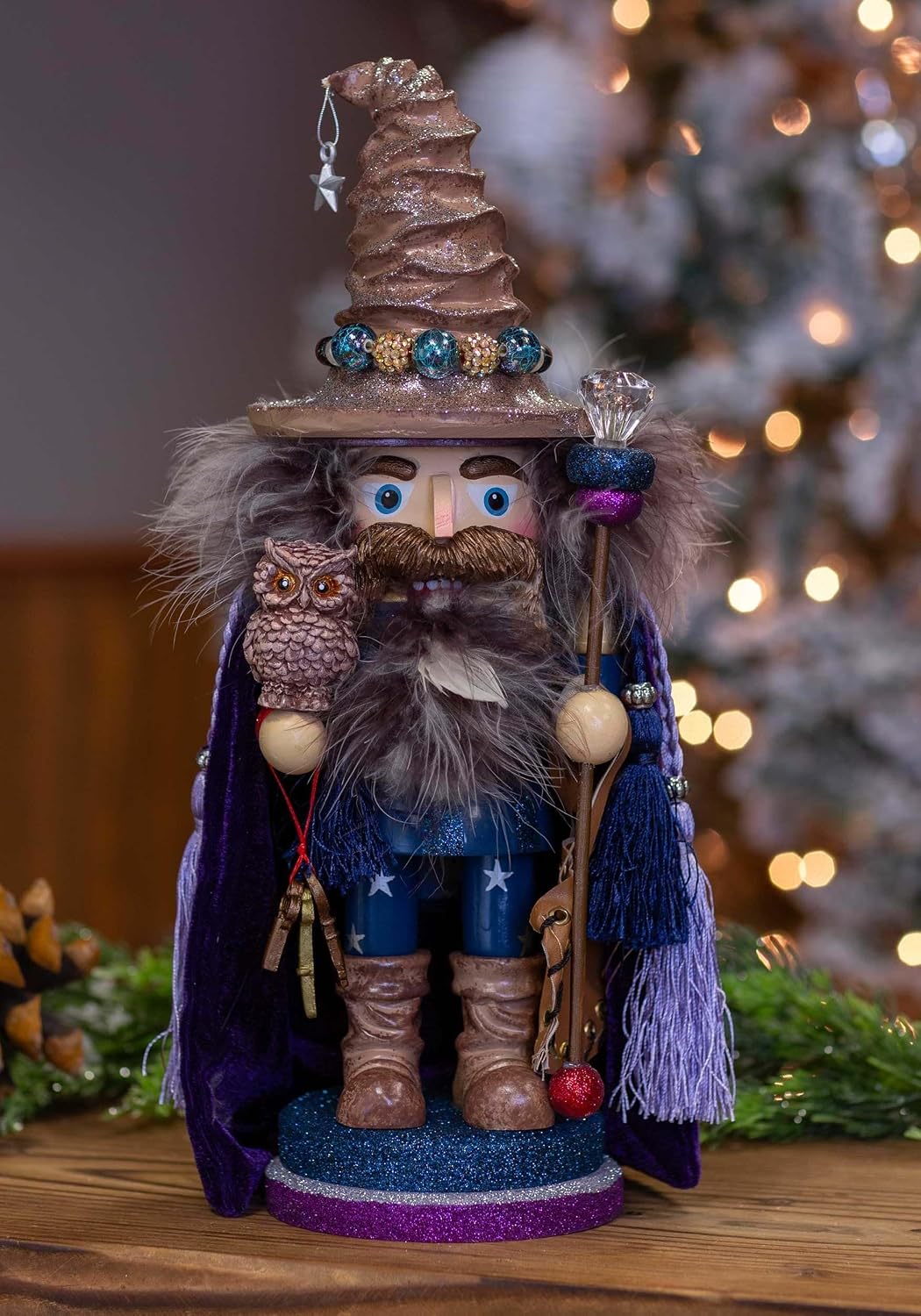
If you’ve ever stood in a holiday aisle staring at a wall of nutcrackers wondering which one is actually right for the person you’re buying for, you’re not alone. A nutcracker — in the classic sense — is a painted wooden figure, usually depicting a soldier, king, or character, with a lever mechanism in the back that (at least in theory) can crack a nut. In practice, most decorative nutcrackers today serve as collectibles and seasonal décor rather than kitchen tools. The Kurt Adler Hollywood line takes that decorative tradition and runs with it hard, producing character-themed figures that range from fairy-tale wizards to zoo animals to Oktoberfest celebrants. The appeal is simple: instead of giving someone a generic soldier, you give them something that maps directly onto who they are. Done right, themed gifting transforms a holiday decoration into a memory anchor. This guide will help you read the recipient and pick the right figure — with honest notes on where the product specs don’t always match reality.
| EDITOR'S PICKKurt Adler HA0339 18" Hollywood… | Mid-tierKurt Adler Hollywood Wizard Nut… | Budget pickKurt Adler HA0325 15" Gingerbre… | |
|---|---|---|---|
| Height | 18" | 15" | 15" |
| Theme | Partridge in a Pear Tree | Wizard with Owl | Gingerbread Chef |
| Item No. | HA0339 | — | HA0325 |
| Price | $119.99 | $66.40 | $35.97 |
| See on Amazon → | See on Amazon → | See on Amazon → |
Why Themed Nutcrackers Work as Gifts (and When They Don’t)
The core logic behind themed nutcracker gifting is what collectors and gift researchers sometimes call the “identity match” — the idea that a gift lands harder when it reflects something specific about the recipient rather than something generic about the season. Smithsonian Magazine’s feature on the cultural history of the German nutcracker traces the figure’s evolution from functional tool to symbolic character, noting that the shift toward personality-driven designs in the 20th century was precisely what broadened the nutcracker’s appeal beyond German-American households into mainstream holiday culture.
Kurt Adler’s Hollywood series is the most accessible point of entry for this kind of gifting. The figures are widely distributed, consistently available through major retail channels, and priced in a range — roughly $25 to $65 depending on character and size — that suits both casual gifters and enthusiasts adding to an existing collection. They aren’t hand-carved Erzgebirge originals (more on how they display alongside traditional pieces in the FAQ below), but they’re not trying to be. They occupy a distinct lane: recognizable themes, bright colors, reliable construction, and enough visual personality to make them feel personal.
Where the strategy breaks down is when the theme is chosen for the giver rather than the recipient — a subtle but important distinction. Reviewers of the Kurt Adler Wizard Nutcracker (the figure modeled on a classic fantasy magician archetype) repeatedly describe it as a purchase made because they love the wizard aesthetic, only to note with some surprise that the recipient — often a child or a fantasy-fiction fan — immediately claimed it as a favorite. That’s a happy accident. The more reliable path is to start with what the recipient collects, displays, or references in conversation, and work backward to the figure.
Reading the Recipient: A Decision Framework
The gift-matching logic breaks into four broad recipient profiles, based on aggregated reviewer patterns across the Kurt Adler Hollywood line.
The Annual Collector This is the recipient who already has a growing nutcracker collection and receives a new piece each year as a tradition. Reviewers of the Kurt Adler Wizard Nutcracker describe exactly this pattern — one reviewer notes it was the seventh figure in a running collection and describes it as “might be our favorite,” suggesting that novelty within a trusted line matters enormously to this buyer. For annual collectors, the decision rule is: choose a figure that expands thematic range without duplicating what they already own. If they have a soldier and a king, a wizard or a chef reads as an expansion. If they already own the wizard, a zoo or nature theme opens a new category.
The Kurt Adler Partridge in a Pear Tree Nutcracker works particularly well here. Reviewers who identify themselves as experienced collectors — one notes a collection exceeding 20 pieces — describe it as a “beautiful and unique addition,” specifically calling out its distinctiveness from standard character figures. For a collector who has moved past the basics, the seasonal-symbol angle (a Twelve Days of Christmas reference) signals thoughtfulness without requiring deep product research on the giver’s part.
The Memory-Anchor Buyer Some of the most compelling review language in the Kurt Adler line comes from buyers who explicitly tie a figure to a lived experience. A reviewer of the Kurt Adler Zoo Menagerie Nutcracker describes purchasing it specifically to commemorate a safari trip — the figure becomes a souvenir with staying power rather than a disposable memento. This is high-signal gifting: it tells the recipient that you paid attention to something they did or experienced.
For this profile, the theme has to be close enough to the actual memory to register without being so literal that it feels generic. A zoo-themed figure works for a safari trip because it evokes “animals and adventure” rather than demanding an exact match. The same logic applies to the Gingerbread Chef Nutcracker for a recipient who bakes seriously, or an Oktoberfest-themed figure for someone who attended the Munich festival or has deep German heritage.
The Room-Specific Decorator Reviewers of the Kurt Adler Gingerbread Chef Nutcracker almost universally reference placement: kitchen counter, baker’s shelf, holiday kitchen display. This is a distinct gifting category — the recipient isn’t building a collection so much as curating a specific room, and the gift is meant to belong there permanently. For this buyer, the decision rule is theme-plus-placement: if the recipient has a kitchen with visible holiday décor and identifies as a baker or cook, the chef figure is close to a guaranteed fit. Apartment Therapy’s guide to mixing vintage and modern holiday décor notes that themed nutcrackers in kitchen settings work best when they’re consistent in scale with surrounding items — a detail worth passing along if you’re advising someone on display.
The Santa and Holiday Traditionalist The Kurt S. Adler Musical German Santa extends the themed gifting logic into a slightly different collector category — the Santa figurine collector rather than the nutcracker collector per se. This is worth flagging because the two audiences overlap but aren’t identical. Santa collectors tend to prioritize regional or cultural specificity (German Santa versus general department-store Santa), musical elements, and overall scale. Reviewers of this figure respond warmly to the combination of traditional costuming and the musical movement, which adds a sensory dimension that purely decorative figures can’t match. If the recipient collects Santas rather than nutcrackers, this is your bridge product.
The Spec Accuracy Problem: A Note on the RattanView Oktoberfest Pair
No buying guide for this category would be complete without an honest look at a recurring frustration: listed dimensions that don’t match received dimensions.
The RattanView Oktoberfest Nutcracker Couple has drawn consistent praise for bright colors and solid construction — reviewers specifically call out the Bavarian costuming detail and the visual impact of displaying the pair together. But at least one reviewer explicitly flags that the figures arrived at approximately 10 inches in height despite a 14-inch listing. That’s a 28% discrepancy, which matters when you’re planning a display or pairing the figure with other pieces in a collection.
By the numbers:
- Listed height: 14 inches
- Reported received height (per reviewer): ~10 inches
- Discrepancy: approximately 4 inches / 28%
- Impact: figures may read as smaller than expected next to standard 15-inch traditional nutcrackers
The practical takeaway: if display scale matters to your recipient, flag this before purchasing and check the most current product listing for updated dimensions. This spec gap doesn’t undermine the figure’s visual quality, but it’s the kind of detail that can frustrate a collector who planned a specific arrangement. It’s also worth noting that this isn’t unique to RattanView — dimension discrepancies are a documented issue across decorative nutcracker listings generally, as The Spruce’s holiday décor buyer guidance notes when advising readers to verify measurements before purchase.
Frequently Asked Questions
Are Kurt Adler Hollywood nutcrackers the same size across the line, or do dimensions vary significantly between characters? Dimensions vary meaningfully between characters. Most figures in the Hollywood line fall in the 10-to-15-inch range, but specific heights differ by figure, and — as the RattanView Oktoberfest situation illustrates — listed dimensions don’t always match received dimensions. If you’re building a display with consistent scale, verify current specs and read recent reviews before purchasing.
Do these nutcrackers function as actual nutcrackers, or are they purely decorative? They’re almost entirely decorative. While the classic lever mechanism is present on most figures (consistent with the nutcracker form), the hardware is not designed or rated for regular nut-cracking use. Reviewers treat them as display pieces. DW’s reporting on Erzgebirge craft traditions notes that even traditional hand-carved nutcrackers from the region have evolved primarily into decorative objects rather than functional tools over the past several decades.
How do the Hollywood figures look displayed alongside traditional Erzgebirge-style nutcrackers — do they clash stylistically? They can coexist, but the aesthetic gap is real and worth managing intentionally. Traditional Erzgebirge nutcrackers — as described in German Culture’s editorial overview of regional woodcarving — feature muted, natural-wood tones, handcrafted detailing, and a distinctly folk-art sensibility. Kurt Adler Hollywood figures tend toward brighter colors and more commercial production finishes. Apartment Therapy’s guidance on mixing holiday décor styles suggests grouping by theme or color family rather than alternating piece by piece — putting Hollywood-style figures in their own cluster rather than interspersing them with traditional pieces creates a more intentional display.
What is the best way to store themed nutcrackers between seasons to prevent paint or detail damage? The Spruce’s holiday storage guidance recommends individual wrapping in acid-free tissue paper, storage in rigid boxes (not soft bags), and a climate-stable environment away from temperature extremes or humidity. For painted figures with fine facial detail or costume elements, avoid stacking and keep them upright if possible. Original packaging, if retained, is usually the safest storage option.
Is the RattanView Oktoberfest nutcracker couple actually 14 inches as listed? Based on reviewer reports, the received height appears to be approximately 10 inches, not 14. This is a documented discrepancy worth checking against the current listing before purchasing, particularly if scale is a factor in your display plan.
What themed characters are reliably available year to year versus limited seasonal releases? Core characters in the Kurt Adler Hollywood line — including the Wizard, the Gingerbread Chef, and the Partridge in a Pear Tree — have shown multi-year availability in aggregated retail data, though stock can thin between October and January during peak demand. The Oktoberfest-themed figures tend to see stronger availability in the August-through-October window aligned with the festival season. Seasonal-specific figures (Twelve Days of Christmas themes, for example) are less predictably restocked after a given year’s sell-through. If a specific figure is a must-have for an annual gifting tradition, purchasing before November reduces the risk of out-of-stock gaps.
The Decision Rule
If you’re buying for an annual collector: prioritize thematic novelty and verify they don’t already own the figure. If you’re buying for a memory-anchor occasion: match the theme to the experience, not the calendar. If you’re buying for a room-specific decorator: confirm the placement context before selecting a character. And if scale matters for any of these scenarios: read the current reviews for dimension accuracy before committing, especially for figures with a history of spec discrepancies.
Themed nutcrackers work as gifts precisely because they require the giver to pay attention. The research you do upfront — knowing whether your recipient leans toward fantasy, food, nature, or heritage themes — is what transforms a holiday decoration into something worth keeping for twenty years.